

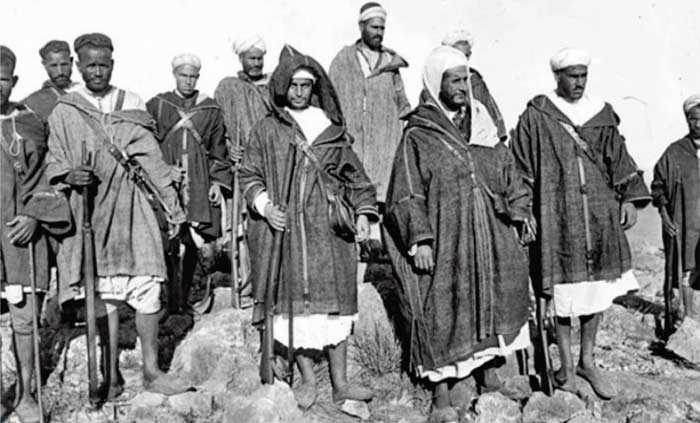
The Moroccan people, led by the family of former resistance fighters and former members of the Liberation Army, commemorated on Monday the 56th anniversary of the recovery of the city of Sidi Ifni, one of the bright pages in the process of the heroic struggle for independence and the completion of Morocco's territorial integrity.
Indeed, on June 30, 1969, foreign occupation forces were forced to retrocede this part of the Kingdom, after heroic battles led to defend the homeland and preserve its unity.
On this occasion, the High Commission for Former Resistance Fighters and Former Members of the Liberation Army (HCAR) recalled the popular uprisings in the Atlas, the Rif, and all regions of Morocco after the imposition of the protectorate treaty on the Kingdom on March 30, 1912, highlighting the legitimate claim of the Moroccan people for freedom and independence.
Like other regions, the Aït Baâmrane tribes demonstrated an exemplary spirit of bravery, courageously opposing foreign expansion attempts, fighting heroic battles to defend Morocco's unity and its sacred values, the HCAR indicates in a statement.
The inhabitants of this region also supplied the armed resistance of the North with weapons and ammunition, thus contributing to the epic of the Revolution of the King and the People, it adds.
The city of Sidi Ifni played a major role in the struggle for national liberation and territorial integrity, strengthening the cells and organizations of the resistance with fearless fighters who distinguished themselves in battles against colonial forces, training and mentoring many heroes ready to sacrifice their lives for the freedom and unity of the Kingdom.
The statement highlights in this sense the strong contribution of the Aït Baâmrane tribes to the victorious launch of the Liberation Army in the Southern provinces in 1956 to complete independence and liberate the territories occupied by Spain.
These same tribes also played a significant role in the historic uprising of November 23, 1957, which the international press echoed at the time, praising the courage and determination of the fighters in the face of the occupier.
The inhabitants of this region distinguished themselves by their constant presence in all stages of the struggle led by the Moroccan people, under the leadership of the Alaouite Throne, for the completion of the country's liberation process, launched by the late HM Mohammed V in His speech at Mhamid El Ghizlane on February 25, 1958, the statement reads.
"We solemnly proclaim that We will continue Our action for the return of Our Sahara within the framework of respect for Our historical rights and according to the will of its inhabitants," the late Sovereign had notably indicated.
In this regard, the same source emphasizes the various battles led by the resistance fighters such as those of Tabelkoukt, Bizri, Bourssas, Tighza, and Sidi Ifni, inflicting heavy losses on the occupier despite the modesty of their means. The Aït Baâmrane fighters had surrounded the Spanish forces, giving them no respite, until they called on French troops to break the siege, as during the Rif War after the Battle of Anoual.
Operation "Ecouvillon" led to negotiations resulting in the recovery of Tarfaya in 1958, then Sidi Ifni on June 30, 1969.
In this context, the statement recalls the content of the speech of the late HM Hassan II during His historic visit to Sidi Ifni on June 18, 1972.
The liberation of Sidi Ifni was the prelude to the great momentum for the continuation of the Kingdom's efforts for the recovery of the other parts of the national territory still under the yoke of colonialism, which were crowned by the glorious Green March of November 6, 1975, illustrating the genius of the late HM Hassan II and arousing the admiration of the whole world for its peaceful and civilizational character.
The total liberation of the Moroccan Sahara was thus consecrated on February 28, 1976, with the departure of the last Spanish soldier and the raising of the Moroccan flag over Laâyoune, marking the end of the completion of the Kingdom's territorial integrity from Tangier to Lagouira.
Under the reign of HM King Mohammed VI, Morocco continues its process of building a state of law, and global, sustainable, and inclusive development of its Southern provinces, to make them regional development hubs and a locomotive of progress in all areas by continuing the launch of projects within the framework of the new development model.
It is also a matter of strengthening the project of expanded and advanced regionalization, desired by His Majesty the King, as a qualitative leap in the process of territorial democracy, with the prospect of making the Southern provinces a successful model of advanced regionalization.
The goal is to allow these provinces to exercise broad competencies and strengthen their democratic management of local affairs, within the framework of a healthy and creative democratic process ensuring their influence as a national economic hub and a bridge between Morocco and the countries of sub-Saharan Africa, as well as between the countries of the North and the South.
By celebrating this glorious anniversary, whose national, symbolic, and historical significance is the pride of all Moroccans, the family of former resistance fighters and former members of the Liberation Army remembers the epics of the national struggle for freedom, independence, and unity, reaffirming its unwavering attachment to the preservation of the country's territorial integrity.
In commemorating the 56th anniversary of the recovery of Sidi Ifni, the family of the resistance and the Liberation Army also expresses the determination of its members to make all sacrifices to preserve the Kingdom's sovereignty over its Southern provinces, and its constant mobilization behind His Majesty King Mohammed VI to defend national achievements.
It also reaffirms its attachment to the autonomy initiative under Moroccan sovereignty which enjoys the consensus of the entire Moroccan people, its political, trade union, and associative forces, welcoming the growing support provided by the international community to this plan, considered a democratic and realistic solution to put an end to the artificial regional conflict around the Moroccan Sahara.
On this occasion, the HCAR has planned, on Monday, a series of activities across the national territory including notably meetings, tributes to several former resistance fighters and former members of the Liberation Army, in addition to the delivery of financial aid to the beneficiaries.
Indeed, on June 30, 1969, foreign occupation forces were forced to retrocede this part of the Kingdom, after heroic battles led to defend the homeland and preserve its unity.
On this occasion, the High Commission for Former Resistance Fighters and Former Members of the Liberation Army (HCAR) recalled the popular uprisings in the Atlas, the Rif, and all regions of Morocco after the imposition of the protectorate treaty on the Kingdom on March 30, 1912, highlighting the legitimate claim of the Moroccan people for freedom and independence.
Like other regions, the Aït Baâmrane tribes demonstrated an exemplary spirit of bravery, courageously opposing foreign expansion attempts, fighting heroic battles to defend Morocco's unity and its sacred values, the HCAR indicates in a statement.
The inhabitants of this region also supplied the armed resistance of the North with weapons and ammunition, thus contributing to the epic of the Revolution of the King and the People, it adds.
The city of Sidi Ifni played a major role in the struggle for national liberation and territorial integrity, strengthening the cells and organizations of the resistance with fearless fighters who distinguished themselves in battles against colonial forces, training and mentoring many heroes ready to sacrifice their lives for the freedom and unity of the Kingdom.
The statement highlights in this sense the strong contribution of the Aït Baâmrane tribes to the victorious launch of the Liberation Army in the Southern provinces in 1956 to complete independence and liberate the territories occupied by Spain.
These same tribes also played a significant role in the historic uprising of November 23, 1957, which the international press echoed at the time, praising the courage and determination of the fighters in the face of the occupier.
The inhabitants of this region distinguished themselves by their constant presence in all stages of the struggle led by the Moroccan people, under the leadership of the Alaouite Throne, for the completion of the country's liberation process, launched by the late HM Mohammed V in His speech at Mhamid El Ghizlane on February 25, 1958, the statement reads.
"We solemnly proclaim that We will continue Our action for the return of Our Sahara within the framework of respect for Our historical rights and according to the will of its inhabitants," the late Sovereign had notably indicated.
In this regard, the same source emphasizes the various battles led by the resistance fighters such as those of Tabelkoukt, Bizri, Bourssas, Tighza, and Sidi Ifni, inflicting heavy losses on the occupier despite the modesty of their means. The Aït Baâmrane fighters had surrounded the Spanish forces, giving them no respite, until they called on French troops to break the siege, as during the Rif War after the Battle of Anoual.
Operation "Ecouvillon" led to negotiations resulting in the recovery of Tarfaya in 1958, then Sidi Ifni on June 30, 1969.
In this context, the statement recalls the content of the speech of the late HM Hassan II during His historic visit to Sidi Ifni on June 18, 1972.
The liberation of Sidi Ifni was the prelude to the great momentum for the continuation of the Kingdom's efforts for the recovery of the other parts of the national territory still under the yoke of colonialism, which were crowned by the glorious Green March of November 6, 1975, illustrating the genius of the late HM Hassan II and arousing the admiration of the whole world for its peaceful and civilizational character.
The total liberation of the Moroccan Sahara was thus consecrated on February 28, 1976, with the departure of the last Spanish soldier and the raising of the Moroccan flag over Laâyoune, marking the end of the completion of the Kingdom's territorial integrity from Tangier to Lagouira.
Under the reign of HM King Mohammed VI, Morocco continues its process of building a state of law, and global, sustainable, and inclusive development of its Southern provinces, to make them regional development hubs and a locomotive of progress in all areas by continuing the launch of projects within the framework of the new development model.
It is also a matter of strengthening the project of expanded and advanced regionalization, desired by His Majesty the King, as a qualitative leap in the process of territorial democracy, with the prospect of making the Southern provinces a successful model of advanced regionalization.
The goal is to allow these provinces to exercise broad competencies and strengthen their democratic management of local affairs, within the framework of a healthy and creative democratic process ensuring their influence as a national economic hub and a bridge between Morocco and the countries of sub-Saharan Africa, as well as between the countries of the North and the South.
By celebrating this glorious anniversary, whose national, symbolic, and historical significance is the pride of all Moroccans, the family of former resistance fighters and former members of the Liberation Army remembers the epics of the national struggle for freedom, independence, and unity, reaffirming its unwavering attachment to the preservation of the country's territorial integrity.
In commemorating the 56th anniversary of the recovery of Sidi Ifni, the family of the resistance and the Liberation Army also expresses the determination of its members to make all sacrifices to preserve the Kingdom's sovereignty over its Southern provinces, and its constant mobilization behind His Majesty King Mohammed VI to defend national achievements.
It also reaffirms its attachment to the autonomy initiative under Moroccan sovereignty which enjoys the consensus of the entire Moroccan people, its political, trade union, and associative forces, welcoming the growing support provided by the international community to this plan, considered a democratic and realistic solution to put an end to the artificial regional conflict around the Moroccan Sahara.
On this occasion, the HCAR has planned, on Monday, a series of activities across the national territory including notably meetings, tributes to several former resistance fighters and former members of the Liberation Army, in addition to the delivery of financial aid to the beneficiaries.
