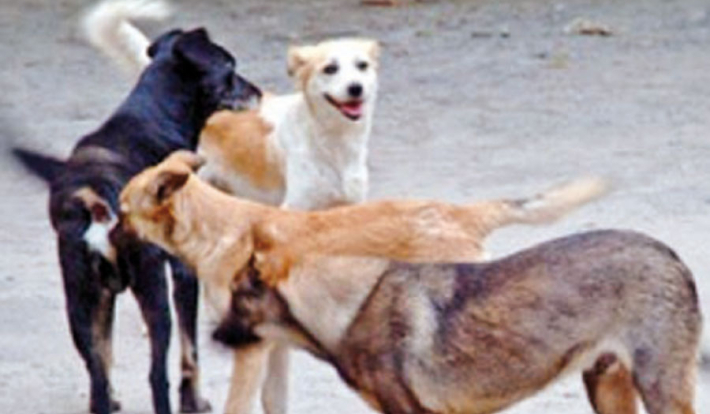
Whether at the "Sidi Bennour Souk in front of the slaughterhouse", throughout the neighbourhoods, or even on the main boulevards, dogs are present everywhere. They lounge in the sun, eat everything, and knock over bins, especially during this period. For the Bennouris, the only way not to get attacked is to avoid them or take a detour. The presence of these canines, which are far from harmless, constitutes a real and permanent danger. Citizens bitten by these beasts risk being infected with the rabies virus, so a vaccination campaign is essential. For some time now, anxiety has gripped the inhabitants, who are trying to understand the reasons for this proliferation.
Who is responsible for protecting citizens from this kind of danger, and what should be done to find an effective solution to this problem?
A professional from the city's veterinary service answers. "In order to overcome this phenomenon, which is unfortunately growing, there are two solutions: systematically vaccinate all dogs and cats that have owners, and eliminate all stray animals that pose a danger". Elaborating on this point, he specifies that "the vaccine can reduce the risk of rabies spreading by 70%". Furthermore, several factors contribute to the proliferation of these dogs. "It is mainly the lack of cleanliness and hygiene," he explains. It must be known that what attracts these beasts is the abundance of household waste containing all kinds of food".
Indeed, dogs are omnivorous animals, certainly, but essentially carnivorous, whose main diet consists of meat and bones, foods sufficiently present in the daily lives of Moroccan families and therefore in the waste they throw into their bins. Added to this are other factors, notably the lack of stray dog collection operations as well as anti-rabies vaccination campaigns. Taking advantage of the fact that a dog is an animal that most often marks its territory, some night watchmen tame stray dogs, which they use for their night guard in the various neighbourhoods and arteries of the city. To fight against this danger, a large vaccination campaign is required from the Regional Office for Agricultural Development, in collaboration with veterinary services and the various districts of the city. This programme should be focused on four points: reducing the number of stray dogs, vaccinating dogs that have an owner, raising awareness and informing the population about rabies, and strengthening the cleanliness and hygiene campaign.
Furthermore, the veterinary services of the city of Sidi Bennour, as well as the services of other cities in the region, must continue to vaccinate domestic animals for free throughout the year. As for the programme for collecting and eliminating stray dogs and cats, it should also be spread over the whole year. Regarding the vaccination of stray dogs, which targets dozens of dogs, a calendar must be put in place for each district and even more so for each city in the region, in particular the city of Sidi Bennour…
The choice of the period for these campaigns is not fortuitous, however. Officials should think about seasonal peaks linked to the mating activity of dogs, in autumn and spring, when we often see a resurgence of rabies.
Rabies remains the tenth deadliest infectious disease. It is an animal disease that can be accidentally transmitted to humans following a bite from a rabid animal. It constitutes a public health problem in Morocco despite the institution of a national programme to fight against the infection since 1986. Stray dogs constitute an endemic reservoir of the rabies virus. This is why the concerned veterinary services must take the measure of the problem, as it can have serious consequences. It must be known that a dog is an animal that marks its territory. Therefore, when it is captured, it frees up the territory that another dog will come to occupy.
It is therefore necessary to vaccinate existing dogs in order to have traceability and at the same time prevent other canines from coming from unknown territories. Vaccination of animals against rabies is done for free, but human treatment, on the other hand, costs between 550 and 600 DH. For information, rabies is not only transmitted by bite, but also by a simple scratch or licking of a grazed skin. The incubation period is usually 20 to 60 days.