
FrançaisEnglishالعربيةDeutschEspañolNederlandsItaliano中文

Your cart is empty

Adventure awaits!

About Es-Semara

Es-Semara, Semara or Smara (in Arabic: سمارة) is a Moroccan town. It had 40,347 inhabitants in 2004.

News in Es-Semara

Follow the latest news, projects, and official announcements from your ville.

News 10 Dec 2012 2 min read

Social economy leads to several achievements

Among the beneficiaries of this operation are associations and project leaders, within the framework of a partnership with local authorities.
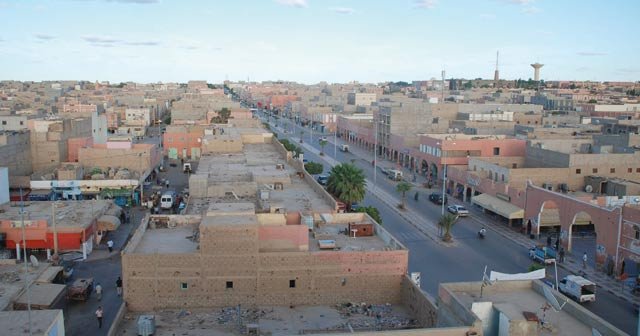
Social economy leads to several achievements

Some 277 people in the Smara province have benefited from projects realised or in the process of being realised within the framework of the social economy programme, jointly financed by the Agency for the Promotion and Economic and Social Development of the Southern Provinces and the National Initiative for Human Development (INDH).

The cost of the projects falling within the framework of this programme, the realisation of which is spread over three phases, amounts to 7.68 million dirhams, of which 7.43 million is borne by the Agency for the Promotion and Economic and Social Development of the Southern Provinces.

The projects realised in the first phase concern the acquisition of equipment for workspaces for 135 project leaders among young graduates and women in precarious situations.

This programme has been allocated to the new generation of the social economy and private initiative programme in the Smara province. Among the beneficiaries of this operation are associations and project leaders, within the framework of a partnership with local authorities. The development of this plan was essentially based on the evaluation of human skills, market potential, and the infrastructure available in the region to define with accuracy the type of income-generating activities called upon to develop.

The approach to developing the social economy also falls within the framework of territorial policy as a strategic choice and a tool for good governance in the management of development programmes based on a transition from sectoral management to territorial management, the adoption of decentralised management, and the development of partnership between regions.

It is also worth highlighting the importance of the challenges contained in this programme, notably the creation of a database related to income-generating activities, the establishment of a roadmap for the development of the social economy in the region, the creation of jobs especially for the benefit of young graduates and women, and the contribution to the realisation of projects included in the framework of the INDH.

Listen
Size:

