

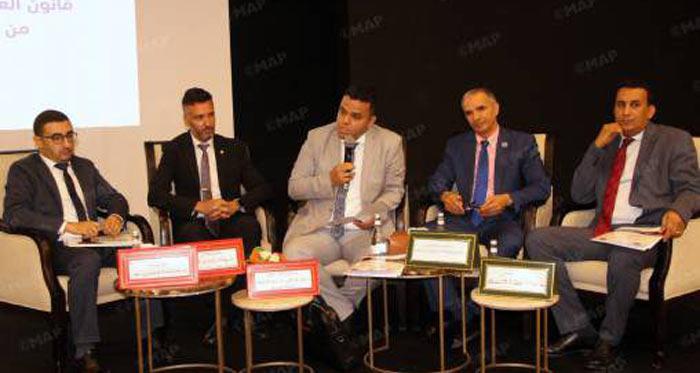
The importance of the law on alternative sentencing in the national penal system and the means to ensure the success of this new experience were on the agenda of a scientific meeting organised on Friday in Agadir, with the participation of experts and representatives of the judicial system and penitentiary establishments.
Initiated by the Mohammed VI Foundation for the Reintegration of Prisoners and the Moroccan Association of Women Judges, under the theme "Law No. 43-22 on alternative sentencing, from essence to efficiency", this event highlighted the need for the optimal implementation of this law.
Speaking on this occasion, the General Coordinator of the Mohammed VI Foundation for the Reintegration of Prisoners, Abdelouahed Jamali Idrissi, indicated that this meeting is part of the Foundation's main advocacy mission aimed at raising awareness of the importance of not resorting to custodial sentences except in cases of absolute necessity and on the basis of clear legal justifications.
He added that the modern concept of sentencing has moved beyond deterrence and vengeance to become a means of rehabilitation, reintegration, and the development of individual capabilities, stressing that achieving these objectives outside prison walls remains more effective and efficient.
For her part, the President of the Moroccan Association of Women Judges, Bouchra Salim, noted that this meeting is particularly important given the imminent entry into force of the law on alternative sentencing, whose preparatory implementation phase requires open debate and an exchange of views between the various stakeholders, notably judges and administrative officials.
This conclave aims to bring the content and provisions of this law closer to practitioners and to examine ways to implement it effectively and in accordance with Morocco's national and international commitments, and in light of Royal directives in the field of justice and reintegration, she explained.
For his part, the representative of the Supreme Council of the Judicial Power, Abdelatif Kasmouh, stressed that this meeting is part of efforts to create an environment conducive to the implementation of the provisions of Law No. 43-22 on alternative sentencing.
This text represents a qualitative change consistent with the Council's strategic vision, particularly regarding continuous training and strengthening communication with professional associations and civil society organisations, he noted.
Among the themes debated during this meeting were, in particular, "The role of the Public Prosecutor's Office in the implementation of Law No. 22-43 on alternative sentencing", "Legislative innovations of the law on alternative sentencing" and "The role of the General Delegation for Prison Administration and Reintegration in the implementation of the law on alternative sentencing".
Initiated by the Mohammed VI Foundation for the Reintegration of Prisoners and the Moroccan Association of Women Judges, under the theme "Law No. 43-22 on alternative sentencing, from essence to efficiency", this event highlighted the need for the optimal implementation of this law.
Speaking on this occasion, the General Coordinator of the Mohammed VI Foundation for the Reintegration of Prisoners, Abdelouahed Jamali Idrissi, indicated that this meeting is part of the Foundation's main advocacy mission aimed at raising awareness of the importance of not resorting to custodial sentences except in cases of absolute necessity and on the basis of clear legal justifications.
He added that the modern concept of sentencing has moved beyond deterrence and vengeance to become a means of rehabilitation, reintegration, and the development of individual capabilities, stressing that achieving these objectives outside prison walls remains more effective and efficient.
For her part, the President of the Moroccan Association of Women Judges, Bouchra Salim, noted that this meeting is particularly important given the imminent entry into force of the law on alternative sentencing, whose preparatory implementation phase requires open debate and an exchange of views between the various stakeholders, notably judges and administrative officials.
This conclave aims to bring the content and provisions of this law closer to practitioners and to examine ways to implement it effectively and in accordance with Morocco's national and international commitments, and in light of Royal directives in the field of justice and reintegration, she explained.
For his part, the representative of the Supreme Council of the Judicial Power, Abdelatif Kasmouh, stressed that this meeting is part of efforts to create an environment conducive to the implementation of the provisions of Law No. 43-22 on alternative sentencing.
This text represents a qualitative change consistent with the Council's strategic vision, particularly regarding continuous training and strengthening communication with professional associations and civil society organisations, he noted.
Among the themes debated during this meeting were, in particular, "The role of the Public Prosecutor's Office in the implementation of Law No. 22-43 on alternative sentencing", "Legislative innovations of the law on alternative sentencing" and "The role of the General Delegation for Prison Administration and Reintegration in the implementation of the law on alternative sentencing".
