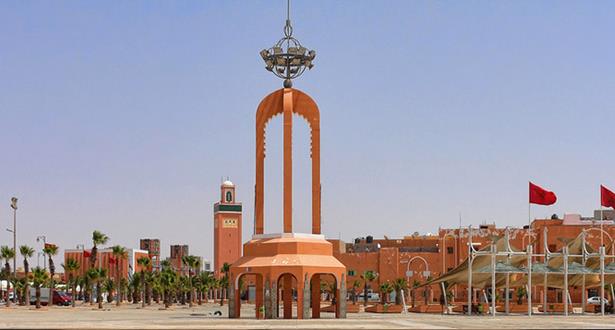
The promising assets and investment opportunities in the Laâyoune-Sakia El Hamra region were highlighted during a meeting organised on Friday in Laâyoune, on the sidelines of the Parliamentary Forum on Economic Cooperation between Morocco and the Parliament of the Economic and Monetary Community of Central Africa (CEMAC).
Organised under the theme "Laâyoune-Sakia El Hamra: Crossroads of opportunities for growth-generating investments", at the initiative of the National Business Council of the General Confederation of Moroccan Enterprises (CGEM), this meeting was an opportunity for CGEM President Chakib Alj to stress that Laâyoune has become, over the years, a strategic economic and commercial centre, and a natural bridge to sub-Saharan Africa.
The significant assets that the region possesses, notably natural resources, modern infrastructure, as well as promising human capital, make it a true engine of growth on a national scale, indicated M. Alj.
He added that several promising sectors in the region are experiencing tangible development, notably extractive industries such as phosphate in Boujdour, maritime fishing, food industries, and renewable energies.
Other sectors, meanwhile, require the strengthening of their dynamic, in particular responsible tourism, given the unique assets of the region, specified M. Alj.
In this regard, he called for working towards the structuring of the offer, the strengthening of air and land connectivity, and the support of local actors to guarantee the quality of services, while insisting on the need to encourage the creation of new industrial activities, such as photovoltaic industries, packaging, and digital services.
These sectors can rely on a qualified local workforce, thanks to the training institutions available in the region, notably the City of Trades and Skills, observed the president of the employers' association.
For his part, the Wali of the Laâyoune-Sakia El Hamra region, Abdeslam Bikrat, affirmed that the development momentum that the region is experiencing is a realisation of the Vision of His Majesty King Mohammed VI for global development in the 21st century, stressing that Laâyoune represents a major hub in the fields of the blue economy, renewable energies, and multidimensional development.
Moroccan companies have today become an inspiring model in their African environment and a stimulating model for economic partners in the Mediterranean space, he maintained.
He noted that this positioning is explained by their ability to create wealth and advance the economy, given the potential that the Kingdom possesses.
Taking the floor, the President of CGEM Laâyoune-Sakia El Hamra, Mohamed Salem Ben Messaoud, highlighted the boom that the Laâyoune-Sakia El Hamra region is experiencing, within the framework of the new development model for the Southern provinces.
This Royal project, he indicated, has given rise to structuring projects in the fields of infrastructure, transport, and renewable energies, which has contributed to improving the business climate and strengthening the region's attractiveness for investment.
The current challenge does not lie in the availability of projects, but rather in the mobilisation of entrepreneurial initiative, the stimulation of economic actors, and the establishment of conditions conducive to transforming achievements into concrete opportunities for growth and employment, he continued.
The Director of the Regional Investment Centre (CRI) of Laâyoune-Sakia El Hamra, Mohamed Jifer, for his part, highlighted the main components of the region's territorial offer, strengthened thanks to the development model specific to the Southern provinces, which has contributed to improving competitiveness.
In this regard, M. Jifer recalled that the region has qualified human capital, promising potential in terms of renewable energies, in addition to considerable fishery resources, which constitute real levers for growth.
These strategic assets give the region strong economic attractiveness, strengthening its competitiveness and its appeal for investments, he concluded.
Organised under the theme "Laâyoune-Sakia El Hamra: Crossroads of opportunities for growth-generating investments", at the initiative of the National Business Council of the General Confederation of Moroccan Enterprises (CGEM), this meeting was an opportunity for CGEM President Chakib Alj to stress that Laâyoune has become, over the years, a strategic economic and commercial centre, and a natural bridge to sub-Saharan Africa.
The significant assets that the region possesses, notably natural resources, modern infrastructure, as well as promising human capital, make it a true engine of growth on a national scale, indicated M. Alj.
He added that several promising sectors in the region are experiencing tangible development, notably extractive industries such as phosphate in Boujdour, maritime fishing, food industries, and renewable energies.
Other sectors, meanwhile, require the strengthening of their dynamic, in particular responsible tourism, given the unique assets of the region, specified M. Alj.
In this regard, he called for working towards the structuring of the offer, the strengthening of air and land connectivity, and the support of local actors to guarantee the quality of services, while insisting on the need to encourage the creation of new industrial activities, such as photovoltaic industries, packaging, and digital services.
These sectors can rely on a qualified local workforce, thanks to the training institutions available in the region, notably the City of Trades and Skills, observed the president of the employers' association.
For his part, the Wali of the Laâyoune-Sakia El Hamra region, Abdeslam Bikrat, affirmed that the development momentum that the region is experiencing is a realisation of the Vision of His Majesty King Mohammed VI for global development in the 21st century, stressing that Laâyoune represents a major hub in the fields of the blue economy, renewable energies, and multidimensional development.
Moroccan companies have today become an inspiring model in their African environment and a stimulating model for economic partners in the Mediterranean space, he maintained.
He noted that this positioning is explained by their ability to create wealth and advance the economy, given the potential that the Kingdom possesses.
Taking the floor, the President of CGEM Laâyoune-Sakia El Hamra, Mohamed Salem Ben Messaoud, highlighted the boom that the Laâyoune-Sakia El Hamra region is experiencing, within the framework of the new development model for the Southern provinces.
This Royal project, he indicated, has given rise to structuring projects in the fields of infrastructure, transport, and renewable energies, which has contributed to improving the business climate and strengthening the region's attractiveness for investment.
The current challenge does not lie in the availability of projects, but rather in the mobilisation of entrepreneurial initiative, the stimulation of economic actors, and the establishment of conditions conducive to transforming achievements into concrete opportunities for growth and employment, he continued.
The Director of the Regional Investment Centre (CRI) of Laâyoune-Sakia El Hamra, Mohamed Jifer, for his part, highlighted the main components of the region's territorial offer, strengthened thanks to the development model specific to the Southern provinces, which has contributed to improving competitiveness.
In this regard, M. Jifer recalled that the region has qualified human capital, promising potential in terms of renewable energies, in addition to considerable fishery resources, which constitute real levers for growth.
These strategic assets give the region strong economic attractiveness, strengthening its competitiveness and its appeal for investments, he concluded.