

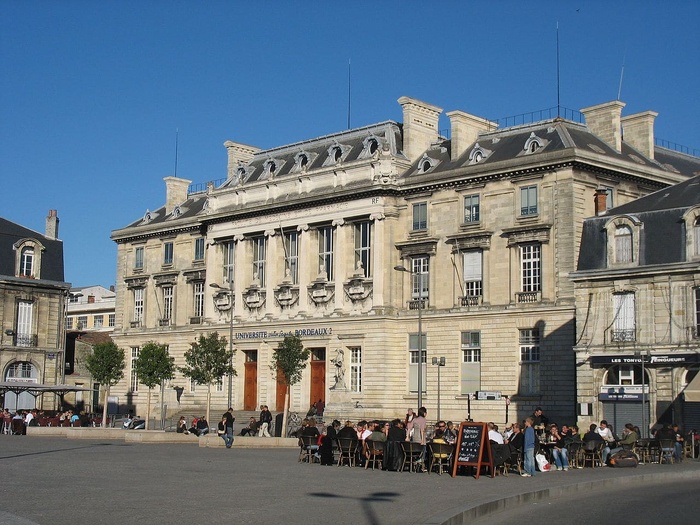
It was a visit marked by symbols and memory that recently took place at the Bordeaux Law University. A delegation composed of French and Moroccan jurists, businessmen, and alumni of this prestigious institution walked the cobblestones of the University which, in the words of jurist Jean du Bois de Gaudusson, is that of kings and high-flying intellectuals, but also the stronghold of noble causes.
This historical link was solemnly celebrated in 1963, when Hassan II, on an official visit to Bordeaux, received the honorary doctorate from the university, where he had indeed obtained the diploma in advanced civil law studies. During this ceremony, he spoke with emotion about his memories as a student, highlighting his deep attachment to French legal culture.
Beyond the diplomatic gesture, this visit is part of an ancient and vibrant tradition: that of visits by jurists, intellectuals, and former students, nostalgic and fervent defenders of the central role that the University of Bordeaux has always played in the diplomatic rapprochement between the two lands: the Kingdom and France.
Among the members of the delegation, Mr. Hubert Seillan, president of the France-Morocco Foundation for Peace and Sustainable Development, recalled that this institution has always embodied a pivotal role in human rights and international law, welcoming into its lecture halls lawyers, judges, magistrates, and statesmen who are very familiar with that noble cause which is the Moroccan Sahara.
This moment of academic reunion was also an opportunity to pay tribute to Jean de Gaudusson, professor emeritus, former president of the University of Bordeaux-IV from 1996 to 2001, and former president of the Agence Universitaire de la Francophonie from 2001 to 2005. An unwavering friend of Morocco, he worked throughout his career to promote the humanist values of the Francophonie, North-South dialogue, and Franco-Moroccan friendship. He did not hesitate to describe the Kingdom as a "rare example of a traditionalist country that has known how to embrace with lucidity and courage the values of rapprochement carried by the Francophonie." Humble and only speaking of himself when insisted upon, he admits that he was nevertheless proud to have crossed paths with iconic personalities such as Boutros Boutros-Ghali, Léopold Sédar Senghor, Abdou Diouf, or even Amin Maalouf. Encounters, he says, that nourished his deep conviction: that "dialogue between cultures is not a posture, but a mission."
Today a councillor at the Sorges town hall, after having been its mayor, Jean du Bois de Gaudusson continues, with the same passion, his commitment to the service of the values of transmission and dialogue. It is, moreover, with emotion that he confided to "L'Opinion" that the late Hassan II had fully embraced the spirit and ideals carried by the University of Bordeaux, putting this knowledge at the service of His country and His people. "He was an iconic King, for whom diplomacy was second nature," he says, recalling how "this great Royal figure knew how to combine tradition and modernity, erudition and strategic vision."
The visit of the delegation, which included Mr. Hassan Idrissi Sentissi, was also an opportunity to evoke a little-known but foundational page of common History: the schooling of the late Hassan II in Bordeaux. The future Sovereign, then Crown Prince, pursued his higher education there in the 1950s. He attended the Bordeaux Faculty of Law where He distinguished Himself by His seriousness, His presence, and His pronounced interest in legal and political disciplines. Legend has it that the people of Bordeaux, struck by the courtesy and liveliness of the young Prince, already called Him "Your Majesty." This study stay, although discreet, deeply marked His vision of the State and the law, reinforcing His attachment to the values of balance, diplomacy, and sovereignty. It is in this same University that the late Mohammed V would also have maintained privileged ties, thus consolidating a dynastic tradition of intellectual attendance of learned France.
According to Mr. Seillan, the Moroccan delegation that recently visited this University and was received with honors by the dean only perpetuated a tradition: that of friendly Franco-Moroccan diplomatic visits that revive the memory of the University of Moroccan Kings. A University that is not only a higher education establishment, but a high place of shared memory between two nations linked by language, law, History, and a certain idea of human dignity.
In an era sometimes marked by the amnesia of deep ties, the University of Bordeaux stands as a living witness of an exceptional companionship, between two shores united by law, culture, and a shared vision of humanity.
Three questions for Jean du Bois de Gaudusson, a fervent defender of Franco-Moroccan friendship: "What Hassan II had understood is that knowledge is a quiet power"
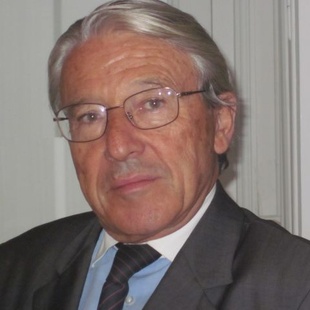
- Mr. de Gaudusson, you are often cited as one of the privileged witnesses of the university companionship between France and Morocco. What, in your opinion, distinguishes this link from those that France maintains with other Francophone countries?
- The link with Morocco is of a particular nature. It is a deep resonance between two legal systems, two intellectual traditions that understand each other. Morocco has never been a passive student of the Francophonie. On the contrary, it has been a sovereign actor. It is a fundamental exchange, nourished by centuries of shared History, of ambiguities sometimes, but also of a beautiful mutual esteem.
- You mentioned in another context the "iconic" character of the late Hassan II. Beyond the Bordeaux studies of Moulay Hassan, then Crown Prince, what do you retain of His way of embodying, as Sovereign, power through the prism of knowledge?
- What the late Hassan II had understood is that knowledge is a quiet power. He knew how to handle legal language with a finesse that impressed the most meticulous of French jurists. He was not simply cultured but intellectually structured and had a capacity to think about the State with rigor, while keeping a sensitivity to Moroccan cultural traditions. This fertile tension between tradition and modernity, He embodied without ever falling into imitation. His vision of diplomatic elegance was sovereign and His love for the Francophonie, which He lived and brought to life, was immense.
- "Diplomatic elegance"… What do you mean by that?
Law and knowledge: The origins of an enlightened reign
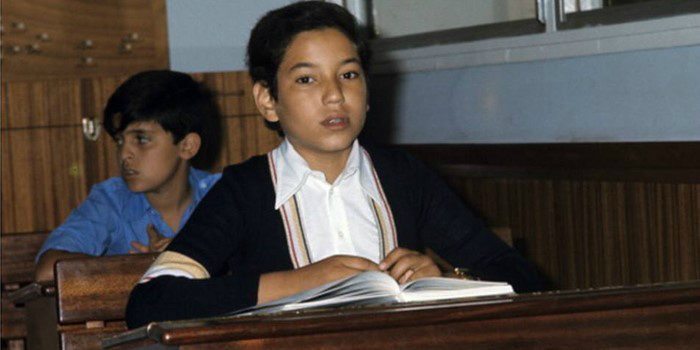
From His earliest childhood, His Majesty King Mohammed VI benefited from a rigorous and prestigious education, in perfect accordance with the Moroccan Royal tradition. At the age of four, He began His schooling at the Royal College of Rabat, an elite establishment intended to prepare princes for the highest responsibilities. On June 28, 1973, then nine years old, the Crown Prince obtained His primary school certificate. He then continued His secondary studies at the same college, obtaining His Moroccan baccalaureate there in 1981.
In 1985, He obtained a law degree from the Faculty of Legal, Economic and Social Sciences of Rabat. His thesis, devoted to "The Arab-African Union and the strategy of the Kingdom of Morocco in terms of international relations," already revealed a deep commitment to Africa and the Arab world, as well as a lucid vision of geopolitical issues.
His Majesty continued to enrich His knowledge by obtaining, in 1987, a first Certificate of Higher Studies in Political Science, with honors. The following year, in July 1988, He passed, also with honors, the exams for the Diploma of Advanced Studies (DEA) in public law.
Driven by the constant concern to strengthen dialogue and international cooperation, His August Father, the late Hassan II, decided to entrust Him with an internship in Brussels, in November 1988, with Mr. Jacques Delors, then president of the European Commission. This experience, at the heart of European institutions, reinforced His Majesty's vocation to work for a balanced dialogue between the North and the South.
The international dimension of His commitment was illustrated from childhood: on April 6, 1974, at the age of ten, He represented His August Father at the funeral of President Georges Pompidou, thus marking the beginning of a long and fruitful relationship of friendship with the French Republic.
In October 1993, His Majesty defended a doctoral thesis in law at the University of Nice Sophia-Antipolis, crowned with the "very honorable" mention. It focused on "Cooperation between the European Economic Community and the Arab Maghreb Union," a theme revealing His progressive vision of a solidary and harmonious Euro-Mediterranean space.
His Majesty King Mohammed VI has never ceased, over the years, to demonstrate His attachment to the ideals of the Francophonie, peace, and mutual respect between peoples.
This entire journey testifies to the deep culture of His Majesty, His unwavering attachment to universal values, and His desire to build bridges between civilizations, in particular between Europe and Africa, between France and Morocco, united by a centuries-old friendship that the Sovereign has never ceased to promote with constancy, nobility, and vision.
Retrospective: At the sources of the knowledge of Crown Prince Moulay Hassan
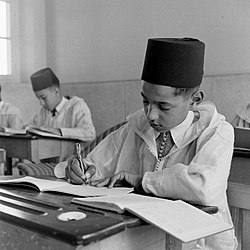
His Royal Highness Crown Prince Moulay Hassan received, within the prestigious and solemn setting of the Royal Palace of Fez, the first teachings of the noble Quranic science. These precious lessons were given to him by renowned scholars, such as the respected professor Moulay Tayeb Alaoui, in a setting conducive to spiritual elevation and the anchoring of the values of piety and moral rigor specific to the Alaouite dynasty.
It was then at the Royal College of Rabat, an elite institution reserved for the training of members of the Royal Family and the highest executives of the Kingdom, that His Highness continued His schooling with diligence and a sense of duty. He brilliantly obtained His baccalaureate there in 1948, proof of His seriousness and His commitment to the path of knowledge, under the attentive gaze of His August Father, the late Mohammed V.
Driven by this requirement for excellence and animated by a firm will to serve His country with competence and lucidity, Prince Moulay Hassan continued his university studies in Rabat, at the Centre for Higher Moroccan Studies, an institution attached to the Faculty of Bordeaux. He obtained His law degree there in 1951, before deepening His knowledge and obtaining, the following year, the diploma of advanced civil law studies from the Faculty of Bordeaux in 1952. He was then engaged in a doctoral program at the Bordeaux Faculty of Law when, in August 1953, the ordeal of exile occurred, imposed on the Royal Family, and which lasted until November 1955.
Later, after His accession to the Throne as Sovereign of the Kingdom of Morocco, the late Hassan II received, on June 25, 1963, the insignia of honorary doctor of the University of Bordeaux. This honorary title was presented to him by Dean Lajugie in tribute to His academic journey, His intellectual stature, and the depth of His commitment to the service of knowledge and the influence of the Kingdom.
Fact sheet: An institution like no other…
The Bordeaux Faculty of Law is one of the oldest legal institutions in France. It is part of the University of Bordeaux, whose origins date back to the 15th century. The University was founded in 1441 by a bull of Pope Eugene IV, at the initiative of Archbishop Pey Berland and with the support of King Charles VII. At the time, it included four Faculties: arts, medicine, theology, and canon law.
The Faculty of Law as such experienced real growth from the 19th century. After the upheavals of the French Revolution, the University had been abolished, then gradually reorganised under Napoleon. The Bordeaux Faculty of Law was reborn in this context in 1806. It quickly became a recognised hub for the training of jurists, administrators, and magistrates.
Throughout the 19th and 20th centuries, it acquired a solid reputation on a national and international scale. It attracts many students, including foreigners, and has seen several prominent personalities pass through its ranks. One of its most famous deans was Professor Fernand Lajugie, who had the honor of presenting the title of honorary doctor to the late Hassan II, then King of Morocco, in 1963.
Today, the Bordeaux Faculty of Law is integrated into the University of Bordeaux, renovated as part of the French university reform. It offers a wide range of training in public law, private law, political science, international relations, and relies on several renowned research laboratories. It remains a reference in the French university landscape, both for the quality of its teaching and for its intellectual heritage.