

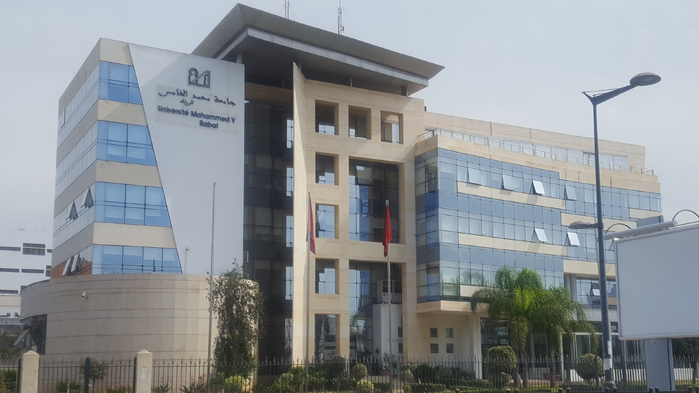
During this symposium organised by the Private Law Department at the Souissi Faculty of Law in Rabat, draft law No. 02.23 relating to civil procedure was analysed in detail by representatives of the stakeholders, namely Rachid Ouadifi, Director of Civil Affairs and Legal and Judicial Professions at the Ministry of Justice, Said Baaziz, President of the Parliamentary Committee on Justice, Legislation, Human Rights and Freedoms, and El Houcine Ziani, President of the Association of Moroccan Bars.
Ouadifi stated during his speech that the draft law has "brought a set of achievements" regarding the substance, believing that the changes introduced in the new civil procedure do not in any way affect the essence of the law.
1,200 amendment proposals have been made to this draft law, a first in the history of the Moroccan parliament, he recalled, stressing that the draft law is the result of an in-depth study that took comparative law into account. According to the official, the philosophy of the reform, which he described as a "silent revolution", consists of making civil justice more efficient.
For his part, Said Baaziz, who represents the parliamentary opposition, recalled that the government only accepted 269 amendments. So far, the draft law as amended by the deputies is under discussion in the House of Councillors. Discussions are progressing according to the USFP deputy, who recalled that 309 of the 644 articles of the text have been the subject of detailed discussion.
Another major issue in this reform project concerns equal access to justice for all citizens. "The litigant in Rabat is not the same as the one in Figuig, and we had a discussion at the committee level regarding equal access," specifies Mr. Baaziz.
The President of the Association of Moroccan Bars, El Houcine Ziani, remains opposed to the current version of the text at a time when lawyers and the Ministry of Justice are continuing the dialogue to find a consensual version.
He expressed his doubts as to the ability of these amendments to "answer all the questions of litigants and lawyers". He denounced, for example, Article 383 which, according to him, prejudices the constitutional principle of equality before the law.
He also criticised the minimum threshold of 80,000 dirhams to file an appeal in cassation. An excessive amount that hinders access to justice, according to the President of the ABAM, who called on the members of the second chamber of Parliament to remedy the "inadequacies of the current text".
Lawyers, let us remember, hope that the text will be amended in their favour while it is still in the hands of the Councillors.
Ouadifi stated during his speech that the draft law has "brought a set of achievements" regarding the substance, believing that the changes introduced in the new civil procedure do not in any way affect the essence of the law.
1,200 amendment proposals have been made to this draft law, a first in the history of the Moroccan parliament, he recalled, stressing that the draft law is the result of an in-depth study that took comparative law into account. According to the official, the philosophy of the reform, which he described as a "silent revolution", consists of making civil justice more efficient.
For his part, Said Baaziz, who represents the parliamentary opposition, recalled that the government only accepted 269 amendments. So far, the draft law as amended by the deputies is under discussion in the House of Councillors. Discussions are progressing according to the USFP deputy, who recalled that 309 of the 644 articles of the text have been the subject of detailed discussion.
Another major issue in this reform project concerns equal access to justice for all citizens. "The litigant in Rabat is not the same as the one in Figuig, and we had a discussion at the committee level regarding equal access," specifies Mr. Baaziz.
The President of the Association of Moroccan Bars, El Houcine Ziani, remains opposed to the current version of the text at a time when lawyers and the Ministry of Justice are continuing the dialogue to find a consensual version.
He expressed his doubts as to the ability of these amendments to "answer all the questions of litigants and lawyers". He denounced, for example, Article 383 which, according to him, prejudices the constitutional principle of equality before the law.
He also criticised the minimum threshold of 80,000 dirhams to file an appeal in cassation. An excessive amount that hinders access to justice, according to the President of the ABAM, who called on the members of the second chamber of Parliament to remedy the "inadequacies of the current text".
Lawyers, let us remember, hope that the text will be amended in their favour while it is still in the hands of the Councillors.
