

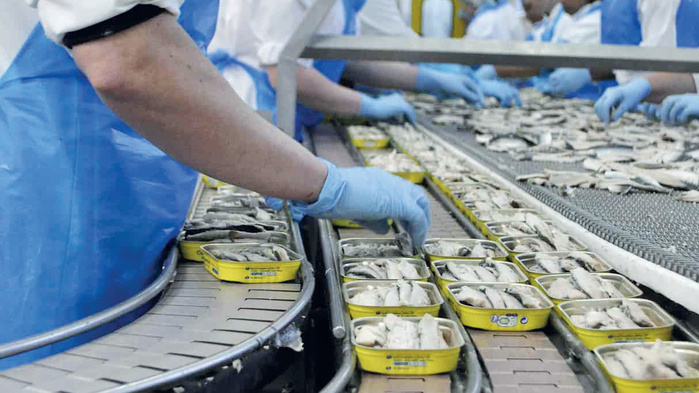
With some 3,500 km of coastline and a significant reserve of pelagic fish, the maritime fishing sector has always been an important component of various government plans, due to its pioneering role in the national economy. In addition to its strong contribution to food security, fisheries production contributes 2.3% to GDP, with a turnover reaching 28 billion dirhams in 2023, not to mention the 700,000 direct and indirect jobs generated by the sector. "These performances make Morocco the leading producer of fisheries products in Africa and the 15th globally," welcomes Hassan Sentissi El Idrissi, President of the National Federation of Industries for the Processing and Valorisation of Fishery Products in Morocco (FENIP), giving the example of Moroccan sardine cans which account for 43% of the global market. A state of affairs that grates, as evidenced by the highly controversial verdict of the Court of Justice of the European Union (CJEU) cancelling the fishing and agricultural agreements between Morocco and the European Union (EU) in response to complaints from the Polisario Front. A ruling that primarily harms European countries where household spending on fishery and aquaculture products is constantly rising. For the Kingdom, the partnership itself, sealed in 1988, then renewed and deepened over the years, was more diplomatic in nature, allowing it to consolidate its relations with its primary trading partner in exchange for unacknowledged political support. But while Rabat benefited little from said agreements economically, receiving no more than 50 million euros annually in addition to technical assistance for the fisheries sector, their political stakes remain significant. Because yes, the fisheries sector positions Morocco as an active player in global and regional agendas and represents a stakeholder in regional initiatives around the blue economy with the Mediterranean, the European Union, and the African continent. "The Kingdom's maritime resources grant it undeniable political weight on the international scene. The criticisms voiced by European countries such as France, Belgium, or even Spain regarding the European Court are tangible proof of this," comments Abdellah Elamri, a security expert and geopolitical risk analyst, specifying that these major powers continue to support Rabat within international bodies to preserve friendly ties with Morocco, which are very advantageous economically. It is true that the twenty-seven have several other suppliers of maritime products, such as China or Ecuador, except that the most diversified products come from Moroccan coasts. Sardines and fishmeal represent the largest part of the volume, but the value of imports from Morocco also stems from octopus and squid. Regarding cost price, the example of fishmeal is striking. In 2022, the EU imported 247,234 tonnes of fishmeal, representing a value of 403 million euros. The average price of these imports amounted to 1,603 EUR/tonne. However, the highest price was recorded in Norway (2,167 EUR/tonne) and the lowest was reached in Morocco (1,469 EUR/tonne). The shortfall is therefore evident and the impact on the European consumer is significant.
Despite good performance, adjustments are necessary!
If at the international trade level, the figures for the fishing sector are commendable, its socio-economic footprint remains, nevertheless, modest given Morocco's fisheries potential and the opportunities offered in terms of growing demand for seafood. Thus, the head of FENIP highlights the imperative to rethink the national economic model to open new horizons for the sector. "First of all, there must be a reform of the marketing of industrial fish within the framework of a purely Moroccan, innovative, and high-performance model, adapted to the specificities of our current industrial fabric," advocates Hassan Sentissi, who calls for the definitive suppression of parasitic intermediaries. This reform must concern the mastery of the entire chain of financial flows of all fish distribution chains while strictly ensuring compliance with the cold chain.
He also attacks the financing difficulties encountered by operators in the sector, who call for the implementation of adapted maritime credits. This financial mechanism would serve to encourage investments in innovative and sustainable technologies, thereby facilitating access to capital in a way that makes the national industry more resilient and competitive. Such measures could constitute real growth drivers, job creation for young people, and reduction of poverty and territorial inequalities.
3 questions to Jamil Ouazzani: "We need a conference to take stock of the blue economy in Morocco"
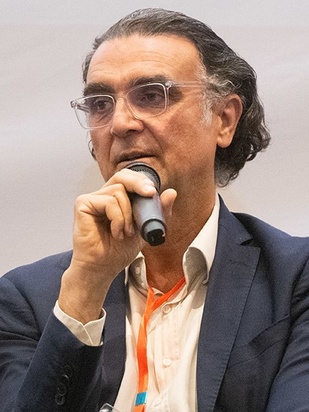
- How can the blue economy be a vector for economic development, for tourism for example?
There are many parameters that have changed in the tourism market. Target customers today are increasingly sensitive to sustainable tourism. There are therefore significant investments that would need to be made to meet this new demand. For example, the port of Tanger Ville has started to offer sustainable tourism circuits in recent years, which are in high demand by cruise passengers, especially luxury ones. We are therefore able to increase turnover and increase profit margins, with little effort. These are therefore simple and easy-to-reproduce circuits.
- How can we better benefit from fisheries resources in a sustainable way?
The Mediterranean is a very polluted sea, which seriously threatens maritime resources and also the sources of income of the national territory. To reduce the stress on the sea, we must act above all on human behaviour. For example, as part of the awareness campaigns we organise, we created underwater labyrinths for children, and we asked divers to recover the waste found in the sea. We found tyres, bicycles, plastic, etc. To take the case of plastic waste, if in 2050, we continue to use it in the same way, in the oceans, we would have more plastic than fish. This behaviour thus kills the entire marine ecosystem. We must therefore show vigilance to be able to benefit from maritime resources in a responsible manner. At the port level, there are initiatives being taken, notably the implementation of waste valorisation units, we pay attention to the number of cruises welcomed by the port to guarantee favourable living conditions for marine fauna and we are going to become a blue flag, which imposes several environmental rules to be respected.
- What are your recommendations for a national strategy for the blue economy?
First of all, we must organise a conference to take stock of the situation and discuss what must be done for the promotion of the blue economy. There is therefore a communication effort to be made on the subject. Then, we need a clear conception of the blue economy. There are several definitions that would need to be framed, because this is what will allow for the development of targeted and effective awareness actions, especially among young people and children, who are the ambassadors of ecological action. Furthermore, awareness must become an integral part of school curricula throughout the territory. And finally, there must be coordination between all parties concerned in the sector to avoid overlaps in decisions and actions.
