

Initiated in partnership with the National Center for Scientific and Technical Research (CNRST), this scientific conclave, which brought together experts from 22 countries in Europe and the African Atlantic coast, aims to strengthen collective capacities against nuclear, radiological, biological, and chemical (NRBC) risks, to promote the exchange of technological know-how, and to promote coordinated responses to cross-border threats, whether of natural, accidental, or deliberate origin.
This event was marked by a rich program including conferences, technical workshops, tabletop exercises, and emergency simulations, bringing together civilian and military experts, researchers, and national, European, and African health professionals.
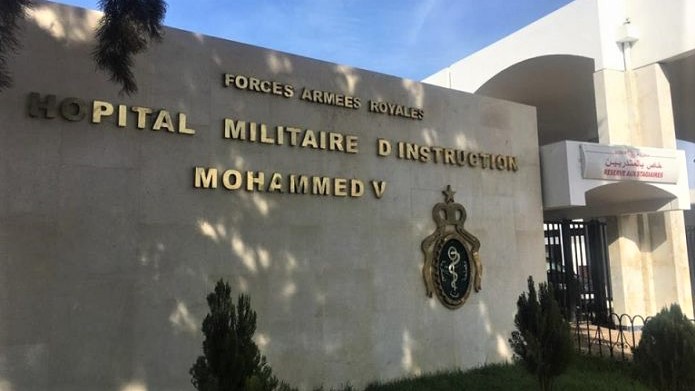
In this context, a simulation exercise of a suspected case of MPOX (monkeypox) was organized at the Center for Virology, Infectious and Tropical Diseases (CVMIT) under the HMIMV, illustrating Morocco's proactive approach to health emergency management.
This simulation allowed participants to standardize procedures for handling highly contagious cases, as well as to promote exchanges on ways to combat these threats.
The Medical Colonel-Major, Khalid Ennibi, Chief Physician of the CVMIT of the HMIMV in Rabat, indicated that this international practical exercise is part of the High Solicitude granted by His Majesty the King, Supreme Commander and Chief of General Staff of the Royal Armed Forces, may God assist Him, to the modernization of military medicine, particularly in the prevention of biological risks resulting from emerging and re-emerging diseases.
He insisted, in a statement to the MAP, on the importance of strengthening the level of vigilance and competence of key actors, while recalling that Morocco's strategic position and experience give it a role as a bridge between the countries of the North and those of the African Atlantic coast to develop common strategies for fighting epidemics.
For her part, the Director of the CNRST, Ms. Jamila El Alami, said she was "satisfied" with this collaboration with the FAR, highlighting the importance of this crisis scenario mobilizing national and international experts around a highly contagious agent.
Ms. El Alami specified that the eNovation project aims to strengthen response capacities to biological threats by integrating cutting-edge technologies, such as artificial intelligence and augmented reality, highlighting the role of the CNRST in scientific diplomacy and Morocco's contribution to regional health security.
In the wake of this, several international experts praised the Kingdom's expertise in health crisis management.
Thus, the international coordinator at the Belgian National Crisis Center, Mr. Ives Van Haute, congratulated Morocco for its strategic role in the eNovation project and for its ability to extend the cooperation network to the African scale. The Belgian expert stressed the importance of training first responders in new NRBC techniques and strengthening collaboration between European and African training centers.
For his part, Mr. Ndtoungou Schouame Patrice Thierry, Divisional Commissioner in charge of health training at the General Delegation for National Security of Cameroon, expressed the satisfaction of the African participants, highlighting the richness of the exchanges of experience and the relevance of the exercise in the African context.
"This is the first of its kind to bring together so many countries of the Atlantic coast around such a scenario," noted the Cameroonian official, affirming his country's intention to take full advantage of the lessons learned.
Mr. Omar Nyabi, a Moroccan expert based at the Catholic University of Louvain, stressed the relevance of drawing inspiration from the Moroccan model in health crisis management, believing that this approach allows for the pooling of expertise and the strengthening of collective prevention and reaction capacities, while insisting on the importance of drawing solid lessons from this meeting in order to better anticipate future crises.
This scientific initiative, at the crossroads of health security and international cooperation, reflects Morocco's commitment to anticipating global crises and positioning itself as a key regional actor in management
This event was marked by a rich program including conferences, technical workshops, tabletop exercises, and emergency simulations, bringing together civilian and military experts, researchers, and national, European, and African health professionals.
In this context, a simulation exercise of a suspected case of MPOX (monkeypox) was organized at the Center for Virology, Infectious and Tropical Diseases (CVMIT) under the HMIMV, illustrating Morocco's proactive approach to health emergency management.
This simulation allowed participants to standardize procedures for handling highly contagious cases, as well as to promote exchanges on ways to combat these threats.
The Medical Colonel-Major, Khalid Ennibi, Chief Physician of the CVMIT of the HMIMV in Rabat, indicated that this international practical exercise is part of the High Solicitude granted by His Majesty the King, Supreme Commander and Chief of General Staff of the Royal Armed Forces, may God assist Him, to the modernization of military medicine, particularly in the prevention of biological risks resulting from emerging and re-emerging diseases.
He insisted, in a statement to the MAP, on the importance of strengthening the level of vigilance and competence of key actors, while recalling that Morocco's strategic position and experience give it a role as a bridge between the countries of the North and those of the African Atlantic coast to develop common strategies for fighting epidemics.
For her part, the Director of the CNRST, Ms. Jamila El Alami, said she was "satisfied" with this collaboration with the FAR, highlighting the importance of this crisis scenario mobilizing national and international experts around a highly contagious agent.
Ms. El Alami specified that the eNovation project aims to strengthen response capacities to biological threats by integrating cutting-edge technologies, such as artificial intelligence and augmented reality, highlighting the role of the CNRST in scientific diplomacy and Morocco's contribution to regional health security.
In the wake of this, several international experts praised the Kingdom's expertise in health crisis management.
Thus, the international coordinator at the Belgian National Crisis Center, Mr. Ives Van Haute, congratulated Morocco for its strategic role in the eNovation project and for its ability to extend the cooperation network to the African scale. The Belgian expert stressed the importance of training first responders in new NRBC techniques and strengthening collaboration between European and African training centers.
For his part, Mr. Ndtoungou Schouame Patrice Thierry, Divisional Commissioner in charge of health training at the General Delegation for National Security of Cameroon, expressed the satisfaction of the African participants, highlighting the richness of the exchanges of experience and the relevance of the exercise in the African context.
"This is the first of its kind to bring together so many countries of the Atlantic coast around such a scenario," noted the Cameroonian official, affirming his country's intention to take full advantage of the lessons learned.
Mr. Omar Nyabi, a Moroccan expert based at the Catholic University of Louvain, stressed the relevance of drawing inspiration from the Moroccan model in health crisis management, believing that this approach allows for the pooling of expertise and the strengthening of collective prevention and reaction capacities, while insisting on the importance of drawing solid lessons from this meeting in order to better anticipate future crises.
This scientific initiative, at the crossroads of health security and international cooperation, reflects Morocco's commitment to anticipating global crises and positioning itself as a key regional actor in management