
 5 days
The Route of the Kasbahs: Immersion in the Heart of Southern Morocco
A contemplative journey between the peaks of the High Atlas and the pre-Saharan expanses, at the rhythm of the valleys and earthen fortresses.
A journey through earthen architecture
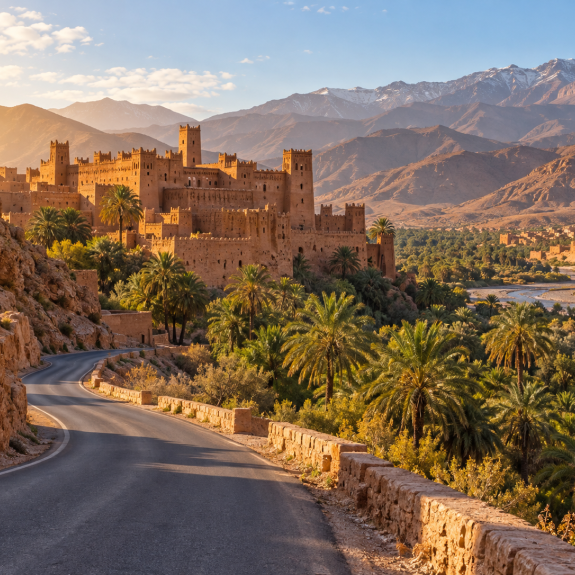
The Route of the Kasbahs is much more than just a road itinerary; it is a dive into the history and architectural genius of the Berber populations of Southern Morocco. Between the southern slopes of the High Atlas and the first dunes of the desert, the landscape transforms, offering a succession of verdant valleys, spectacular gorges, and rammed-earth fortresses that seem to emerge from the ochre earth. This route, which centres around Ouarzazate, invites a slow exploration, where every turn reveals a new palm grove or fortified village.
Highlights of the itinerary
The journey is marked by the discovery of iconic sites where the art of building with raw earth reaches its peak. The Kasbahs, former seigneurial residences, and the ksour, fortified villages, bear witness to an ancestral social and defensive organisation. Among the unmissable elements, we find:
- The Dadès and Drâa valleys, true ribbons of greenery winding through the arid mountains.
- The Todra and Dadès gorges, where dizzying cliffs offer striking panoramas over the wadis below.
- Fortified villages, some of which are World Heritage sites, offering a dive into traditional oasis life.
- Palm groves, true lungs of freshness, where the shade of date palms protects market garden crops.
Travel tips and pace
To fully appreciate the richness of this region, it is advisable to favour a slow pace. The Route of the Kasbahs cannot be travelled in one go; it is savoured in stages. Planning several days allows you to stray from the main axes to explore isolated Douars or stroll through local Souks. This type of trip is particularly suitable for lovers of grand landscapes, photography, and architectural history. Travellers in search of calm and authenticity will find in the Riads and traditional inns places of rest conducive to contemplation.
Seasonal guidance
The climate plays a decisive role in planning this stay. Spring (from March to May) and autumn (from September to November) are the most temperate periods, offering mild temperatures ideal for walking and outdoor visits. In summer, the heat can be intense, particularly in the deep valleys, while winter brings marked coolness, especially near the peaks of the High Atlas. It is recommended to check local weather conditions before any travel, as wadis can sometimes impact the accessibility of certain sections after rainy episodes.
In short, the Route of the Kasbahs is an invitation to discover an essential facet of Morocco, where the hand of man has known how to adapt with elegance to the harshness and beauty of the natural elements.


Tours
5 days
7 days