

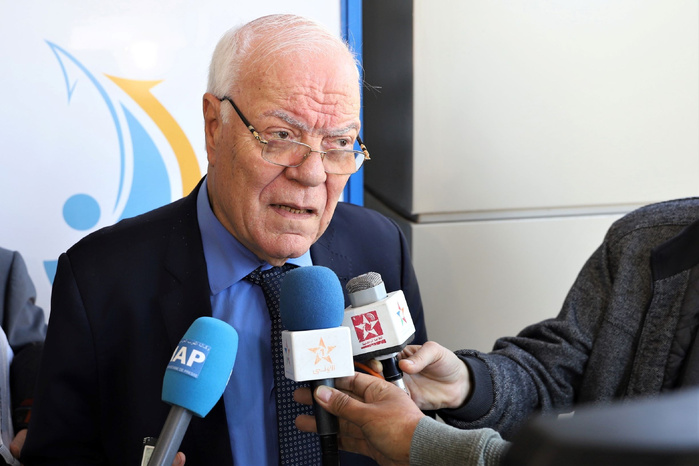
This transition represents much more than an obligation; it is a "historic chance", added Mr. El Idrissi, who was speaking at the opening of the Regional Decarbonisation and Sustainability meetings.
"The European green taxonomy now structures international financing, while the new directive on corporate sustainability imposes increased requirements across the entire value chain," he said, specifying that large international groups now integrate "rigorous carbon reporting" into their purchasing criteria.
"Under the visionary leadership of His Majesty King Mohammed VI, Morocco has chosen to anticipate these changes. Our ambition is not to follow standards, but to become a reference player in the low-carbon economy," noted the president of ASMEX.
This process means less energy dependence, more industrial sovereignty, higher added value, and increased attractiveness for investors and talent while preserving the environment, he continued, noting that decarbonisation is not just the business of large groups; it concerns agricultural cooperatives, artisans, local industries, and tourism stakeholders.
"Our Regional Decarbonisation Caravan is not a simple communication tool, but an operational mechanism anchored in the territories. We are mobilising financing, training, technological partnerships, and adapted certifications to support every Moroccan company in its transition," maintained Mr. El Idrissi.
In the same vein, Badia Bitar, speaking on behalf of the president of the Chamber of Commerce, Industry and Services of Marrakech-Safi, indicated that this strategic initiative is fully in line with the priorities of Morocco and the Marrakech-Safi region regarding energy transition and sustainable development.
Decarbonisation and sustainability are no longer choices, but imperatives, remarked Ms. Bitar, stressing that decarbonisation is part of Morocco's commitments to fighting climate change, notably through its national sustainable development strategy and its nationally determined contribution aimed at a significant reduction in greenhouse gas emissions by 2030.
These efforts, far from being a constraint, constitute a real lever for competitiveness, particularly in the face of international partners who are increasingly demanding in terms of traceability, carbon footprint, and compliance with environmental standards, she explained before concluding that "betting on sustainability today means anticipating the challenges of tomorrow".
The Regional Decarbonisation and Sustainability caravan, organised by ASMEX and ENGIE, in partnership with key players, brings together experts, public institutions, and stakeholders for a day to discuss current environmental issues.
The objective is to present the appropriate energies to succeed in decarbonisation, to identify opportunities for innovation and collaboration in energy transition and carbon footprint reduction, to strengthen the competitiveness of Moroccan exports by integrating sustainable practices and adopting environmentally friendly solutions, and to promote sustainability in the export sector by encouraging economic actors to engage in a responsible and innovative approach.
"The European green taxonomy now structures international financing, while the new directive on corporate sustainability imposes increased requirements across the entire value chain," he said, specifying that large international groups now integrate "rigorous carbon reporting" into their purchasing criteria.
"Under the visionary leadership of His Majesty King Mohammed VI, Morocco has chosen to anticipate these changes. Our ambition is not to follow standards, but to become a reference player in the low-carbon economy," noted the president of ASMEX.
This process means less energy dependence, more industrial sovereignty, higher added value, and increased attractiveness for investors and talent while preserving the environment, he continued, noting that decarbonisation is not just the business of large groups; it concerns agricultural cooperatives, artisans, local industries, and tourism stakeholders.
"Our Regional Decarbonisation Caravan is not a simple communication tool, but an operational mechanism anchored in the territories. We are mobilising financing, training, technological partnerships, and adapted certifications to support every Moroccan company in its transition," maintained Mr. El Idrissi.
In the same vein, Badia Bitar, speaking on behalf of the president of the Chamber of Commerce, Industry and Services of Marrakech-Safi, indicated that this strategic initiative is fully in line with the priorities of Morocco and the Marrakech-Safi region regarding energy transition and sustainable development.
Decarbonisation and sustainability are no longer choices, but imperatives, remarked Ms. Bitar, stressing that decarbonisation is part of Morocco's commitments to fighting climate change, notably through its national sustainable development strategy and its nationally determined contribution aimed at a significant reduction in greenhouse gas emissions by 2030.
These efforts, far from being a constraint, constitute a real lever for competitiveness, particularly in the face of international partners who are increasingly demanding in terms of traceability, carbon footprint, and compliance with environmental standards, she explained before concluding that "betting on sustainability today means anticipating the challenges of tomorrow".
The Regional Decarbonisation and Sustainability caravan, organised by ASMEX and ENGIE, in partnership with key players, brings together experts, public institutions, and stakeholders for a day to discuss current environmental issues.
The objective is to present the appropriate energies to succeed in decarbonisation, to identify opportunities for innovation and collaboration in energy transition and carbon footprint reduction, to strengthen the competitiveness of Moroccan exports by integrating sustainable practices and adopting environmentally friendly solutions, and to promote sustainability in the export sector by encouraging economic actors to engage in a responsible and innovative approach.