
FrançaisEnglishالعربيةDeutschEspañolNederlandsItaliano中文

Your cart is empty

Adventure awaits!

About Marrakech

Marrakech (in Arabic: مراكش Murrākush), known as the Pearl of the South or Gate of the South and the Red City or Ochre...

News in Marrakech

Follow the latest news, projects, and official announcements from your ville.

News 12 Apr 2013 2 min read

The SNSP holds its VIIth Congress in Marrakech
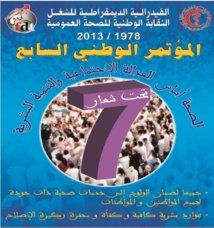
The SNSP holds its VIIth Congress in Marrakech

The National Public Health Union (SNSP) will hold its VIIth National Congress in Marrakech starting today and until Sunday, under the theme "Health, pillar of social justice and development".

According to Mohamed Dahmani, secretary general of the SNSP, affiliated with the Democratic Federation of Labour, this congress constitutes a "very important organisational phase to renovate the union's structures". He added in a statement to "Libé" that the union will also organise, on Saturday (13 April), a conference dedicated mainly to professional misconduct, in which the Ministry of Health, doctors, judges, experts and university professors will participate. The SNSP Congress, which will be attended by 444 delegates, including 56 doctors, nurses, engineers working in the health sector and 96 women, will also look at the health system in Morocco and the various challenges it faces.

On the other hand, Driss El Habchi, a leading member of the SNSP, strongly criticised the way in which the Ramed was implemented. In a contribution sent to "Libé", he mentioned several administrative complications that accompanied the operationalisation of this system. "According to the administrative division," he specifies, "a citizen who lives a few kilometres from the Fes hospital is forced to travel to Taza, because the territorial jurisdiction in which he lives depends on that province."

Furthermore, the citizen who requests the Ramed card must wait several months before receiving it due to the complexity of the procedures and the multiplicity of stakeholders, which "opens the door to all forms of nepotism, favouritism and electoral and political manipulation," specifies Driss El Habchi. "In addition," he adds, "a large segment of potential beneficiaries (about 30% of Morocco's population) has been excluded from this system, because they are not eligible for the AMO while not being part of the social strata with limited income."

Read also page 6

Listen
Size:

