

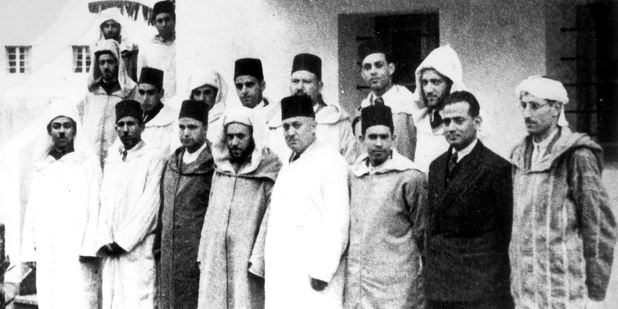
January 11th, a date so dear to Moroccans who are celebrating today the eighty-first anniversary of the Independence Manifesto. A landmark event in the history of the Kingdom and the prelude to emancipation from the colonial yoke.
It was enough for 66 illustrious personalities of the National Movement to embolden themselves to sign a manifesto legitimately demanding, in the midst of the Second World War, the independence of the country to destabilise the General Residency of the French coloniser, which was subordinate to the Vichy government. Independence and democracy were the two aspirations formulated by the signatories of the manifesto, which changed the course of the French protectorate in Morocco, which eventually succumbed to the will of the Moroccan people and their Sultan to determine the destiny of their own country.
In continuity with the spirit of January 11th, the Kingdom has made giant strides, accumulating diplomatic victories, notably through the recognition by several major powers of the Moroccan nature of the Sahara. Added to this are the initiatives aimed at raising Morocco to the rank of influential and powerful countries in the region, including the latest Royal initiative for the Atlantic.
It was enough for 66 illustrious personalities of the National Movement to embolden themselves to sign a manifesto legitimately demanding, in the midst of the Second World War, the independence of the country to destabilise the General Residency of the French coloniser, which was subordinate to the Vichy government. Independence and democracy were the two aspirations formulated by the signatories of the manifesto, which changed the course of the French protectorate in Morocco, which eventually succumbed to the will of the Moroccan people and their Sultan to determine the destiny of their own country.
In continuity with the spirit of January 11th, the Kingdom has made giant strides, accumulating diplomatic victories, notably through the recognition by several major powers of the Moroccan nature of the Sahara. Added to this are the initiatives aimed at raising Morocco to the rank of influential and powerful countries in the region, including the latest Royal initiative for the Atlantic.
Flashback
Historians agree that this date is the most important in the history of the national movement and the struggle for the country's independence. Presented on January 11, 1944, this document constituted a decisive turning point in the struggle to free the kingdom from colonialism, sealing a pact between the King, the late Mohammed V, and the figures of the National Movement.
This agreement, which illustrates the common will of the Throne and the people to end the protectorate for a free and independent Morocco, allowed the phase of public demand for independence and national sovereignty to begin. Reading the Manifesto retrospectively, looking at the way the problem of Independence had been posed, we remain impressed by the strength of the demand that marked the content of the text, at a time when the world was struggling to emerge from the Second World War, and France was emerging from Nazi occupation. From the very first lines, the signatories demanded the independence of Morocco in its territorial integrity under the aegis of King Mohammed Ben Youssef.
Independence and nothing else, but under the authority of the legitimate King, the sole guarantor of unity and the symbol of sovereignty. There was clearly a subtle logic in the proposal that posited liberation as an unavoidable principle. This requirement that the liberation of Morocco could only take place within its natural borders and within the territorial integrity of the Kingdom represented a point of no return in the march towards restoring a nation's right to self-determination. The commemoration of January 11th thus crystallises the will of all sincere patriots devoted to the cause of the people to lead the struggle together to open new horizons, forge a new mentality, and give democratic and sovereign Morocco the place it deserves on the world map.
A founding act in the building of modern Morocco. This building of the future of Morocco, enjoying its political, economic, and cultural independence and where all citizens equally enjoy the fruits of this independence, requires the combining of everyone's efforts and the mobilisation of all potential to meet challenges and consolidate the foundations of a solid edifice capable of facing all challenges. January 11th was the starting point for the Moroccan people to establish democracy, overcome obstacles, and possess all the means of defence and immunity.
The presentation of this Manifesto on January 11, 1944, to the late H.M. Mohammed V, to the French Resident General, to the consuls of Great Britain and the United States in Morocco, and to the ambassador of the Soviet Union, constituted a decisive milestone in the struggle of the Moroccan people. After learning of this important event, this free and proud people organised actions in several cities. The colonial authorities then proceeded to arrest several leaders of the National Movement, following which strikes and demonstrations broke out, particularly in the cities of Rabat, Salé, and Fez. January 11, 1944, therefore concretises the fact that the Moroccan people had moved beyond the stage of demanding simple economic, administrative, and social reforms to demand the country's independence.
The programme was thus mapped out and the objectives defined. A roadmap that would serve as a foundation to which both the King and the Moroccan nationalists around him would cling. A strategy immediately took shape, adapted to national circumstances, but also in correlation with the texts that were flourishing everywhere in the world at that time regarding national liberation movements. Both in the Arab world and in Asia or Africa.
It is not by chance that years later, eliciting echoes of admiration in Africa and Asia, the fight of Mohammed V was evoked as a strong illustration of political commitment, made of wisdom and determination. It is also no coincidence that the French colonial authorities, measuring the depth of the ties that united the King and his people, did not relent for a second to break this sacred bond and deal with the guide of the nation, now propelled onto the national and international stage as a leader whose strength of conviction, spirit of sacrifice for his people, and far-reaching vision went hand in hand with the charisma that his person exuded.
It also took a real conspiracy, a devious campaign of underhanded intrigue and plots, led by General Juin and sub-prefecture mercenaries, to succeed in exiling, on the morning of August 20, 1953, the King and his family, forcing him to leave his country and distance himself from his people. A true betrayal, that is what the plot of a group of constables was towards the person who embodied the millennial history of Morocco and carried all the hopes of the people within him.
Excessive repression, unwavering determination
The repression that followed the publication of the January 11th Manifesto and the meeting at the Royal Palace of Rabat between the Sovereign and the nationalists was fierce. It was matched only by the angry but calm and cold resolution of Mohammed V to defend the freedom of his people and the independence of his country. On April 10, 1947, while visiting Tangier with his young family, he took it upon himself to deliver a founding historical speech from the top of the Mandoubia, in this Mediterranean city separated from Europe by only 13 kilometres.
This solemn appeal had an international impact, given that the capital of the North had a special status as an International Zone and, as such, served as a sounding board for the royal demand, which was none other than the people's demand for independence.
The treacherous blow of General Juin on August 20, 1953, was the sinister response to the Sovereign's tenacity, but it in no way diminished his insight and resolution, since in December 1952, a few months earlier, popular revolts of rare violence broke out in the Central Quarries of Casablanca after the assassination in Tunisia of the trade union leader Farhat Hachad, revolts that also took place, above all, under the banner of support for the King, catching the French prefect of the city, Boniface, and his troops off guard. The conjunction between the King and the national forces was no longer in doubt for the colonial officials.
Moreover, they measured the stakes not without gravity and concluded that it was necessary to root them out. Which they did, without, however, realising that they were strengthening the symbiosis between Mohammed V and his people, giving both additional legitimacy to continue the liberating fight in the name of justice, freedom, and dignity.
On November 16, 1955, after two years of exile in Corsica and Antsirabé (Madagascar), and also after laborious negotiations conducted at La Celle-Saint-Cloud with Antoine Pinay and Edgar Faure, Mohammed V returned to the Kingdom and made a triumphal return in indescribable popular jubilation that left an indelible mark on the memory of millions of Moroccans.
Adhesion: The North joins the march
A few weeks after the presentation of the Manifesto, and in view of its impact on the popular consciousness of the need to free the country from the yoke of colonisation, another document was born, on February 29, 1944, in Tetouan this time, to consecrate the unity of the Moroccan people.
The nationalists of the North insisted on confirming their total and unconditional adherence to the terms and spirit of the Manifesto. Placed under Spanish occupation, the representatives of the national movement in these regions insisted on affirming their attachment to the land, history, and values of this nation of more than a thousand years. They also emphasised the notion of the unity of the people and their legitimate Sovereign as a response to the state of affairs which is the dislocation of the national territory by colonial forces.
They also insisted on specifying that this sacred union concerned the entirety of the lands unjustly despoiled from the North to the South of the Kingdom. A union that materialised in the wake of the political and armed struggle against the occupiers to lead to the independence that occurred in 1956.
The nationalists of the North insisted on confirming their total and unconditional adherence to the terms and spirit of the Manifesto. Placed under Spanish occupation, the representatives of the national movement in these regions insisted on affirming their attachment to the land, history, and values of this nation of more than a thousand years. They also emphasised the notion of the unity of the people and their legitimate Sovereign as a response to the state of affairs which is the dislocation of the national territory by colonial forces.
They also insisted on specifying that this sacred union concerned the entirety of the lands unjustly despoiled from the North to the South of the Kingdom. A union that materialised in the wake of the political and armed struggle against the occupiers to lead to the independence that occurred in 1956.
The Manifesto of the North
Despite the colonial partition that our country was undergoing and the circumstances of the Second World War which did not allow any contact in 1944 between the two parts of the National Movement in the North and the South, the unity of thought was stronger than the prefabricated borders installed by colonialism. And history has recorded that the National Front in the North had presented a memorandum to the great powers in November 1943 demanding independence. But as soon as the Manifesto of January 11, 1944, was born, the National Reform Party presided over by the late Abdelkhalek Torres, may God have his soul, showed its support by reaffirming the unity of the national territory.
Majesty, We have learned of the noble decisions presented to Your Majesty by this elite worthy of authentic Moroccans and valiant fighting nationalists from the Istiqlal Party. These great decisions will mark the glorious history of Morocco because they are based on law, justice, and equity. They constitute the demands of the entire nation and all the people adhere to them.
Anyone who would oppose these aspirations would give proof of their lack of faith, their atheism, their treachery, and their hypocrisy. If the Istiqlal Party raises its voice today by launching such a cry, it is to carry the name of Morocco very high among the living nations and awakened peoples. Majesty, We take this opportunity to join our voice to that of the Istiqlal Party, to support and back this legitimate demand, thus expressing the feelings of Your faithful people in this area of Morocco and reaffirming to Your Majesty that our principles and our feelings in these regions are the same as those that animate loyal Moroccans and everything that saddens you there, grieves us here, and everything that cheers you there, comforts us here…
Indeed, we consider ourselves an integral part of glorious Morocco and its greatness through its Sahara, its countryside, its mountains, its plains, its rivers, its coasts, through its valiant men and its clear-sighted spirits. And if our brothers in the South complain about the French occupier, in the North, we suffer from two evils: the abject Spanish colonialism and the split of our great homeland. It is as if a limb were detached from the body and neither the first nor the second can perform their function. Our misfortune is great in the sense that we suffer misery, injustice, attacks on our religion, and racist hatreds. These excesses aim at our extermination and threaten our authenticity.
4 Rabiï El Aoual 1363 (29-2-1944)
The signatories: Abdelkhalek Torres, Thami El Ouazzani, Ahmed Ghailane, Mohamed Tanji, Mohamed Ettnaya, Mohamed Afilal, Haj Mohamed Chorfi, Haj Mohamed Seffar, Taeb Bennouna.
Majesty, We have learned of the noble decisions presented to Your Majesty by this elite worthy of authentic Moroccans and valiant fighting nationalists from the Istiqlal Party. These great decisions will mark the glorious history of Morocco because they are based on law, justice, and equity. They constitute the demands of the entire nation and all the people adhere to them.
Anyone who would oppose these aspirations would give proof of their lack of faith, their atheism, their treachery, and their hypocrisy. If the Istiqlal Party raises its voice today by launching such a cry, it is to carry the name of Morocco very high among the living nations and awakened peoples. Majesty, We take this opportunity to join our voice to that of the Istiqlal Party, to support and back this legitimate demand, thus expressing the feelings of Your faithful people in this area of Morocco and reaffirming to Your Majesty that our principles and our feelings in these regions are the same as those that animate loyal Moroccans and everything that saddens you there, grieves us here, and everything that cheers you there, comforts us here…
Indeed, we consider ourselves an integral part of glorious Morocco and its greatness through its Sahara, its countryside, its mountains, its plains, its rivers, its coasts, through its valiant men and its clear-sighted spirits. And if our brothers in the South complain about the French occupier, in the North, we suffer from two evils: the abject Spanish colonialism and the split of our great homeland. It is as if a limb were detached from the body and neither the first nor the second can perform their function. Our misfortune is great in the sense that we suffer misery, injustice, attacks on our religion, and racist hatreds. These excesses aim at our extermination and threaten our authenticity.
4 Rabiï El Aoual 1363 (29-2-1944)
The signatories: Abdelkhalek Torres, Thami El Ouazzani, Ahmed Ghailane, Mohamed Tanji, Mohamed Ettnaya, Mohamed Afilal, Haj Mohamed Chorfi, Haj Mohamed Seffar, Taeb Bennouna.
The signatories of the Istiqlal Manifesto of January 11, 1944
Ahmed Ben Taher Mekouar; - Mohamed Ben Larbi Alami; - Hassan Benjelloun; - Mohamed Ben Abderrahmane Saadani; - Abdeslam Mestari; - Mohamed El Bouamrani; - Malika El Fassi; - Tahar Zniber; - Ahmed Cherkaoui; - Ahmed El Manjra; - Jilali Bennani; - Haj Hassan Bouayad; - Ahmed Hamyani; - Mohamed Ghazi; - Mohamed Ben Jilali Bennani; - Abdellah Ibrahim; - Kacem Ben Abdeljlil; - Ahmed El Yazidi; - Abdelkrim Benjelloun; - Saddik Benlarbi; - Mohamed Riffai; - El Hafiane Cherkaoui; - Hachmi Filali; - Mohamed Bensouda (Soudi); - Abdelkebir El Fassi; - Abdelhadi Sekkali; - Mohamed Bel Khadir; - Driss M’hammedi; - Omar Ben Abdejlil; - Abdeljlil El Kabbaj; - Kacem Zhiri; - Abdellah Benaamr Rahmani; - Abdelkader Hassan; - M’hamed Zghari; - Ahmed Bendella; - Mohamed Issaoui Mestassi; - Ahmed Bahnini; - Mohamed Laghzaoui; - Omar Benchemssi; - Messaoud Echiguer; - Abdelouahab El Fassi; - Mohamed El Bakkalli; - Mohamed El Fatmi El Fassi; - El Houssein Ben Abdellah El Ouarzazi; - Abdelhamid Ben Moulay Ahmed Zemmouri; - Ahmed Ben Bouchta; - Ahmed Benchekroun; - Nasser Ben Hadj Larbi; - Mohamed El Yazidi; - Mohamed Diouri; - Abdellah Er-Regragui; - Aboubakr Sbihi; - Mohamed El Jazouli; - Amr Ou Bennaceur Zemmouri; - Mohamed Ben Azzou; - Ahmed Balafrej; - Abdekaziz Ben Driss Lamraoui; - Bouchta Jamai; - Mohamed Hamdaoui; - Haj Othmane Jorio; - Boubker El Kadiri; - Abderrahim Bouabid; - Mehdi Benbarka; - Abdelkbir El Fassi El Fihri; - M’Barek Ben Ahmed El Gharras; - Mohamed El Fassi.
