

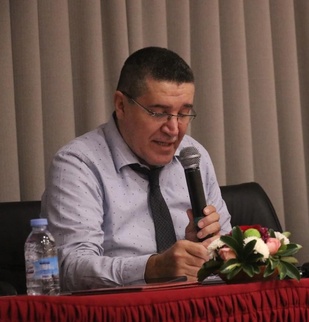
From 14 to 16 January 2025, Rabat, the capital of Morocco, hosted a high-level workshop dedicated to the sustainable management of water resources in Africa. This event is of capital importance in a context where water-related issues are becoming increasingly pressing. The management of water resources, which constitutes a central element of the economic and social development of the African continent, requires an innovative and effective approach. Faced with the scarcity of water resources, the devastating impacts of climate change, and a constantly increasing population, the search for sustainable solutions is becoming a priority. This workshop brought together experts, government decision-makers, and representatives of international institutions to explore the opportunities offered by nuclear sciences and technologies to improve the monitoring and management of water resources on a pan-African scale. Proud to be part of this global initiative, Morocco has demonstrated its commitment to innovation and international cooperation to meet these global challenges.
A strategic partnership for sustainable water management
The workshop was organised in partnership with key players, including the American foundation CRDF Global, the International Atomic Energy Agency (IAEA), the United States Department of State, and the United Kingdom's Department for Energy Security and Net Zero. These international partners have united to provide African countries with innovative solutions for water management and environmental preservation.
This event is part of the Sustained Dialogue on the Peaceful Uses of Nuclear Science and Technology, a global initiative aimed at integrating nuclear technologies into essential sectors such as water, environment, health, and agriculture.
The workshop also highlighted the importance of alignment with the United Nations Sustainable Development Goals (SDGs), particularly those relating to access to drinking water, sanitation, and sustainable management of natural resources. This meeting represents a model of international cooperation, aiming to ensure responsible and equitable management of water resources, accessible to all, while taking into account the ecological and social imperatives of the African continent.
Objectives and challenges of the workshop
The main objective of this regional workshop was to strengthen the capacities of African countries in the assessment and management of their water resources. Particular attention was paid to the use of nuclear and isotopic technologies, which allow for precise monitoring of water quality, identification of its origin and distribution, as well as the detection of contamination or degradation processes. These tools help countries better understand the complex dynamics of their water resources, a crucial element in a context marked by climate change and rapid urbanisation.
The workshop also made it possible to address the pressing challenges that many African countries face, such as water pollution, the growing scarcity of resources, and the environmental impacts associated with global warming. Discussions focused on the development of public policies based on precise and updated scientific data, thus facilitating informed decisions for sustainable water resource management.
Furthermore, the event highlighted the importance of regional and international integration in water resource management. By promoting the exchange of data, expertise, and best practices between countries, the workshop paved the way for more coordinated and shared water resource management on a continental scale. African countries were encouraged to strengthen their collaboration in research and technological innovation to jointly meet water-related challenges.
High-level international participation
This workshop brought together approximately 120 participants from 31 countries, including 25 African countries. Among the speakers were policymakers, scientists, water management experts, as well as representatives from the IAEA, the UN, and several regional institutions. This diversity testifies to the crucial importance of the event for the international community, given that water represents a global challenge requiring close cooperation.
The presence of such a variety of actors favoured the creation of synergies that should eventually lead to more innovative solutions better adapted to local specificities. Exchanges between the different participant profiles made it possible to develop a common vision on the need to accelerate the adoption of advanced technologies to ensure more sustainable and equitable water resource management.
A particular emphasis was placed on the role of technological innovation in supporting African public policies. In addition, the importance of maintaining a permanent dialogue between governments, researchers, and international institutions was highlighted to optimise interventions and ensure the effectiveness of water resource management initiatives.
The key role of Moroccan organisations in water resource management
Moroccan organisations involved in water resource management, such as the National Office of Electricity and Water (ONEE), the General Directorate of Hydraulics (DGH), and the CNESTEN (National Centre for Energy, Sciences and Nuclear Techniques), played a central role during this workshop. ONEE and DGH are essential players in the management of drinking water supply and sanitation in Morocco. For example, ONEE implements innovative solutions to meet water supply challenges, particularly in rural and arid areas where access to water is crucial. Thanks to its expertise, ONEE leads strategic projects that promote more sustainable and equitable water resource management at the national level.
For its part, the DGH is responsible for the planning and management of hydraulic infrastructure, particularly regarding the construction of dams and the improvement of irrigation systems. The agency also plays a key role in the management of groundwater resources by developing projects aimed at optimising water use in the face of drought and population growth.
As for CNESTEN, as a centre of excellence, it is a pioneer in research and innovation in water management. It develops advanced treatment technologies, using radiometry and isotopes in particular to better analyse and manage groundwater resources. These innovations contribute to improving the efficiency of the country's water resource management.
Through these initiatives, Morocco reaffirms its commitment to scientific innovation and sustainability. By integrating these cutting-edge technologies, the country ensures more rational management of its water resources, in accordance with the sustainable development policy established by His Majesty King Mohammed VI, who places innovation and scientific research at the heart of the national development project.
In addition, Morocco plays a leading role in the intergovernmental cooperation agreement for Africa, particularly in the fields of research and training on natural resource management and nuclear energy. This strengthens its relations with African countries and consolidates its position as a model of sustainable natural resource management on the continent.
This workshop represents a significant step forward for sustainable water management in Africa. By focusing on the application of nuclear sciences and technologies, it opens new perspectives for more precise and effective water resource management on a continental scale. Thanks to strategic partnerships and strengthened cooperation, it becomes possible to implement robust water policies, adapted to current challenges, and to ensure equitable access to water for future generations.
This event also highlights the importance of technological innovation in the fight against water scarcity and environmental challenges. Through this initiative, Morocco reaffirms its role as a regional and international leader, consolidating its position as a key player in promoting sustainable development and in the search for innovative solutions for water management on a global scale.