

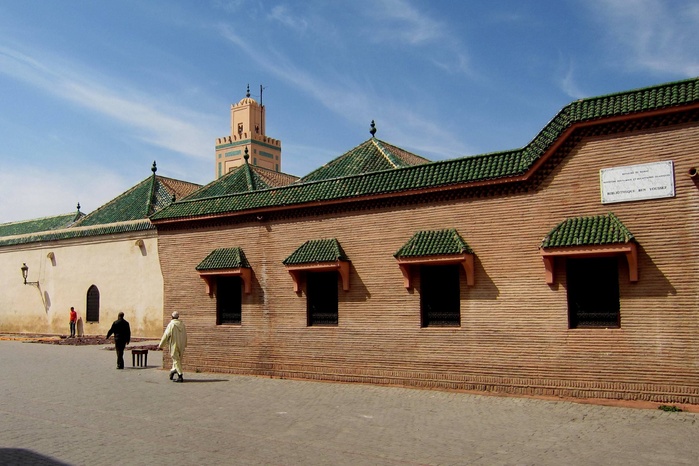
The Ben Youssef Mosque, located in the heart of Marrakech, is one of the most iconic religious buildings in Morocco. Built in 1121 during the reign of the Almoravid emir Ali ben Youssef, this mosque is a testament to the architectural and spiritual refinement of a dynasty that gave so much to the city.
At the beginning of the 12th century, the Almoravid dynasty, of Amazigh origin, ruled over an empire extending from present-day Morocco to the Iberian Peninsula. Marrakech, founded in 1070, was then the flourishing capital of this empire. Ali ben Youssef, a fervent promoter of science and the arts, undertook to endow the city with majestic monuments, including the Ben Youssef Mosque.
Moreover, the famous historian Ibn Khaldoun described Marrakech as "a city with a prominent Almoravid imprint where science and piety mingle harmoniously, shaping the soul and spirit of its inhabitants." The construction of the mosque fits perfectly into this vision of a city flourishing on an intellectual and religious level.
This place of worship was distinguished by its sober and functional architecture, characteristic of the Almoravid style known for its solid and stripped-back constructions, highlighting architectural rigour and purity.
Although the original mosque has undergone numerous modifications over the centuries, the vestiges from the time of its construction allow one to imagine its past splendour. Its plan was inspired by the great mosques of Cordoba, with a vast prayer hall supported by horseshoe arches and a sober but imposing minaret.
Among the remarkable elements of this mosque was its finely decorated mihrab as well as the use of stucco and carved wood ornaments, announcing the influences that would later mark Saadian and Almohad architecture. The presence of a large ablution basin, an essential element of Almoravid architecture, testifies to the importance of ritual purification in Islam.
The geographer and traveller Al-Idrissi wrote about Almoravid buildings that they knew how to "combine the robustness of desert constructions with the refined elegance of Andalusian cities." This description applies perfectly to the Ben Youssef Mosque.
From decline to transformation
With the arrival of the Almohads to power in the middle of the 12th century, Almoravid buildings were largely remodelled or destroyed, in accordance with the puritanical ideals of this new dynasty. The Ben Youssef Mosque was no exception and underwent profound modifications, although some original structures survived.
Over the centuries, the mosque was restored several times, notably under the Saadians and the Alaouites. Near the mosque, the famous Ben Youssef Medersa was also built in the 16th century, which would become a major Islamic learning centre in Morocco.
The French writer Pierre Loti, during his travels in Morocco, described Marrakech as a city "where every stone seems charged with history and where the shadows of sovereigns of yesteryear hover over its minarets." This evocation well illustrates the importance of the Ben Youssef Mosque in the historical landscape of the city.
Today, although the Ben Youssef Mosque retains few elements of its initial Almoravid architecture, it remains a major historical site in Marrakech. Its proximity to the Medersa makes it a pole of attraction for history and architecture enthusiasts.
A symbol of Almoravid influence and a witness to Moroccan architectural evolution, the Ben Youssef Mosque embodies the legacy of an era when Marrakech shone as a leading intellectual and religious centre. Its history, punctuated by transformations and reinterpretations, reflects the richness and complexity of Moroccan heritage through the centuries.
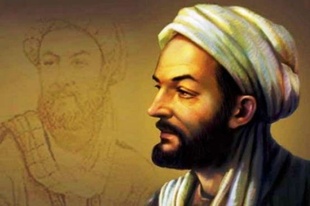
Son of the founder of the Almoravid empire, Youssef ben Tachfine, Ali ben Youssef inherited a vast territory extending from the Maghreb to Al-Andalus. From his accession to the throne, he strengthened the influence of Sunni Maliki Islam by encouraging scholars and imposing strict religious orthodoxy.
He brought in numerous Ulema and reinforced the application of Sharia in his empire. His alliance with influential theologians allowed for the propagation of Islamic education and the consolidation of piety in society. It was under his reign that Marrakech became an essential intellectual hub, attracting scholars from all over the Muslim world.
Ben Youssef transformed Marrakech into a prosperous and well-organised city. He had several essential infrastructures erected, including the famous Ben Youssef Mosque in 1121. This mosque became a centre of prayer and teaching, reinforcing the religious status of the city.
He also undertook urban planning works, notably the expansion of the ramparts of Marrakech to protect the city from attacks. These fortifications, still visible today, testify to his ambition to make Marrakech an impregnable city.
Despite his successes, he had to face the rise of the Almohads, a religious and military movement challenging Almoravid legitimacy. At the end of his reign, Marrakech suffered the assaults of the Almohads, who eventually overthrew the Almoravids in 1147. Nevertheless, the legacy of the latter endures through the monuments and urban organisation they left behind.
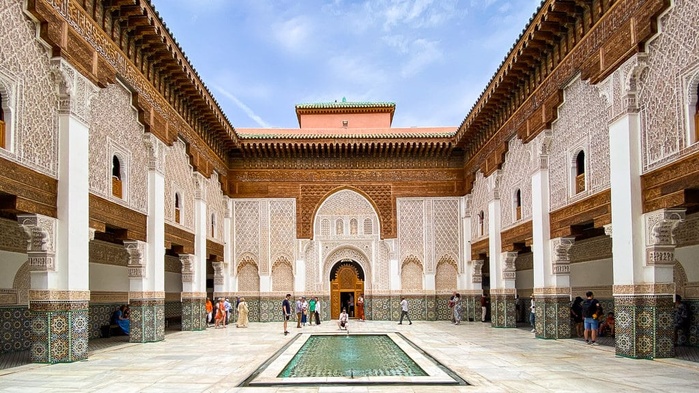
The mosques of Morocco have always embodied a place where architecture, history, and heritage meet harmoniously. The fruit of multiple influences (Arab, Amazigh, Andalusian, and Mediterranean), they reflect a Moroccan identity that is both unique and plural, marked by the diversity of its cultural roots.
Raising their minarets in a majestic surge, Moroccan mosques continue to dazzle with their singularity, where the harmony of carved details and spiritual serenity mingle to bear witness to centuries of meticulous craftsmanship, forged by the multiple influences that have shaped Morocco and its relations with its neighbours.
Through fruitful exchanges, some mosques are not only places of worship, but inimitable architectural masterpieces that only the hand of the Moroccan artisan could reproduce. It is this specificity, deeply rooted in the country's history, that manifests itself in the architecture of these buildings. Their aesthetic beauty and spiritual dimension form an inseparable whole, which any discerning visitor recognises instantly.
For the historian Ahmed Achaâbane, an expert in Islamic architecture, the evolution of arts and architecture is inseparable from an entanglement of internal and external influences. These interactions, both local and foreign, have largely contributed to shaping the Moroccan identity, notably through its architecture.
This constant dialogue of influences has left a lasting mark on Moroccan architecture, giving birth to a distinctive style found in the variety of motifs and the richness of decorations. These elements reveal the genius of the Moroccan artisan, capable of transforming forms and materials into true works of art.
Far from being limited to functional constructions, Moroccan mosques have also evolved on the decorative level. For Achaâbane, architectural evolutions cannot be dissociated from the progress made in fields such as decoration, wood carving, and zellige work. These advances are a reflection of the cultural and economic boom that marked the history of Morocco.
Before the Almoravid dynasty, Moroccan principalities focused more on construction than on decoration. However, with the arrival of the Almohads, Moroccan artisans gave free rein to their creativity, giving birth to plaster decorations and stone sculptures found in monuments such as the mosques of Tinmel and the Koutoubia.
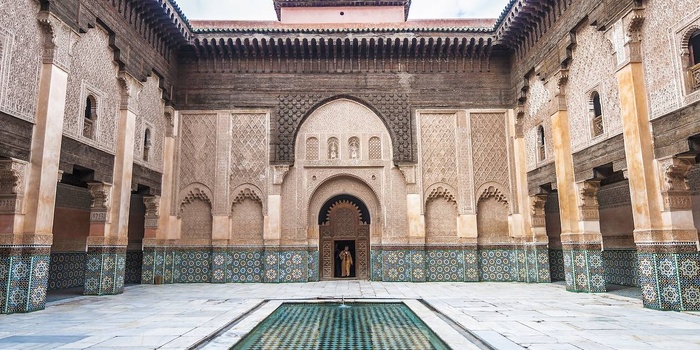
A flagship and standard-bearer of Almoravid architecture, the mosque continues to amaze intellectuals and historians of the Arab world. Prestigious newspapers, such as Al-Ahram in Egypt and Asharq Al-Awsat in Saudi Arabia, have devoted numerous articles to it, praising its historical role and architectural splendour.
In an article published in 1981 by Al-Ahram, one of the oldest daily newspapers in the Arab world, the mosque is described as "a living testimony to Almoravid greatness and Moroccan architectural refinement." The newspaper highlighted "its importance in the dissemination of religious knowledge and the anchoring of the Maliki rite in North Africa."
For its part, the Saudi daily Asharq Al-Awsat praised, in an issue dating from 1997, the restoration and preservation of the monument, stating that "the Ben Youssef Mosque, with its proximity to the famous Medersa of the same name, embodies the perfect symbiosis between spirituality and erudition."
But Al-Ahram went even further, calling the mosque a "spiritual lighthouse of Marrakech, which has seen generations of scholars and worshippers pass through."
Thus, according to the pan-Arab press, the Ben Youssef Mosque is not limited to a simple place of worship: it is a witness to history and a source of inspiration for architects and historians. Through the ages, it remains a "true library of stone, whose walls tell the history of Morocco and Islam," as Asharq Al-Awsat writes.
Marrakech continues, thus, to attract the eyes of the Arab world, and the Ben Youssef Mosque remains, even today, an emblem of its spiritual and cultural prestige.
The Almoravids, a rigorist Amazigh dynasty, emerged from the Sahara with a desire to restore an orthodox Islam, faithful to the precepts of the Sunnah. Inspired by the teachings of the jurist Abdallah Benyassine, they advocated a return to strict Islamic practices and extended their influence across the Maghreb and Andalusia.
When Marrakech was founded in 1062, it quickly became a centre for the dissemination of Islam. Youssef ben Tachfine had mosques and Quranic schools (madrasas) built to establish the religious authority of Maliki Islam. The city attracted scholars and jurists, consolidating its spiritual role. The erection of the Ben Youssef Mosque at the beginning of the 12th century is a striking testimony to this.
From its origin, Marrakech played a key role in the propagation of Islam. Its strategic location made it a meeting point between the populations of the North and those of the Sahara. Under the Almoravids, then the Almohads who took the city in 1147, Islamic influence amplified, giving birth to a city imbued with a strong religious identity. Thus, the entry of Islam into Marrakech marks not only a political transition, but also the beginning of a cultural and spiritual influence that still endures today.