As the final part of the retrospective that the Comptoir des Mines is dedicating to the painter Mohamed Kacimi, the exhibition "Mohamed Kacimi 1994-2003, A Universal Work" looks back at the final years of painting by an artist who made Africa the heart of his artistic commitment.
From the 1990s until his early passing in 2003, Mohamed Kacimi travelled across the African continent, often at the invitation of international organisations such as UNESCO. In 1994, he participated in the "Slave Route" event in Ouidah, Benin. This was followed by stays in Saint-Louis in Senegal, Bamako, or in the Algerian or Libyan deserts, which he traversed in search of that invisible humanity that runs through all his work.
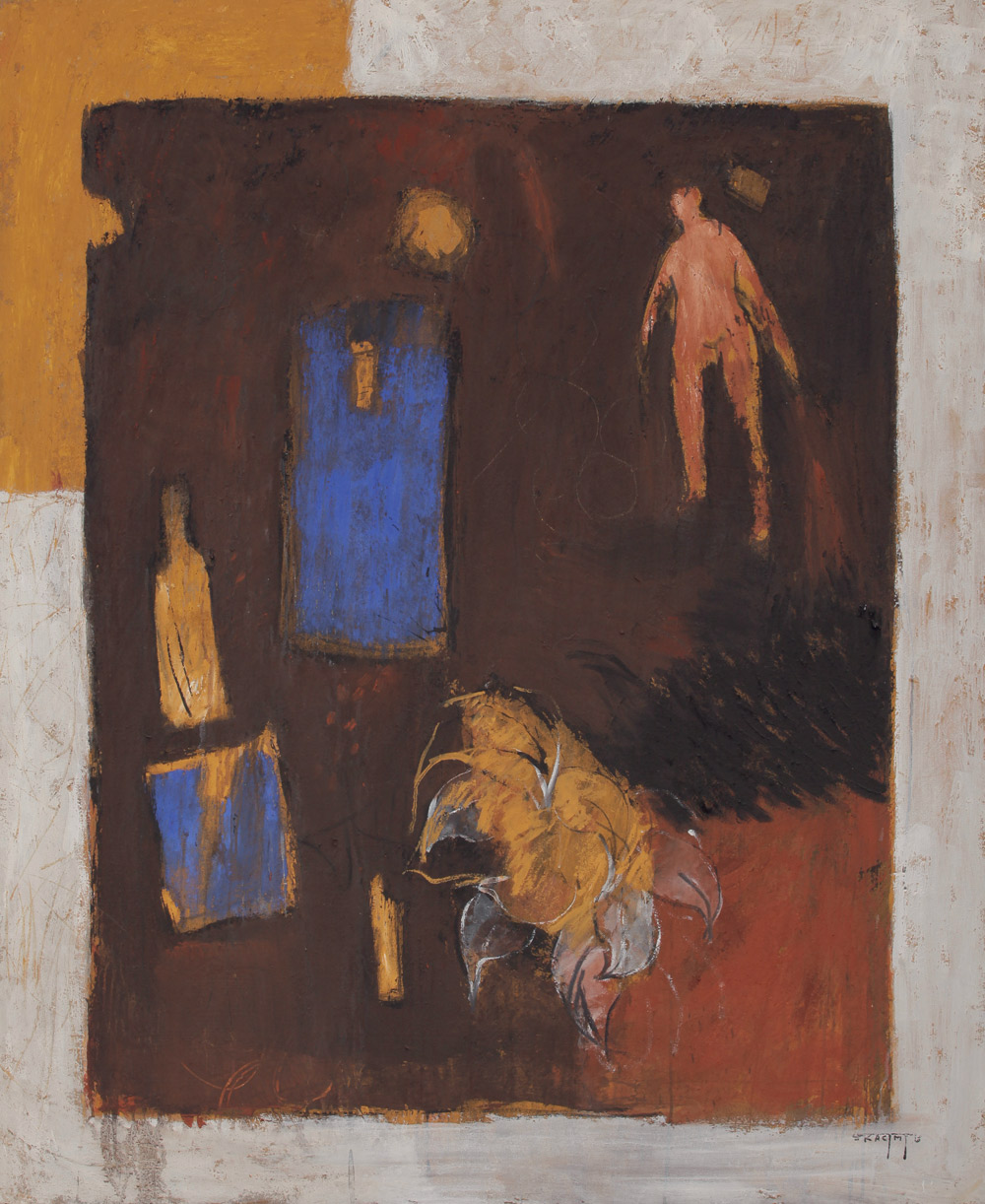
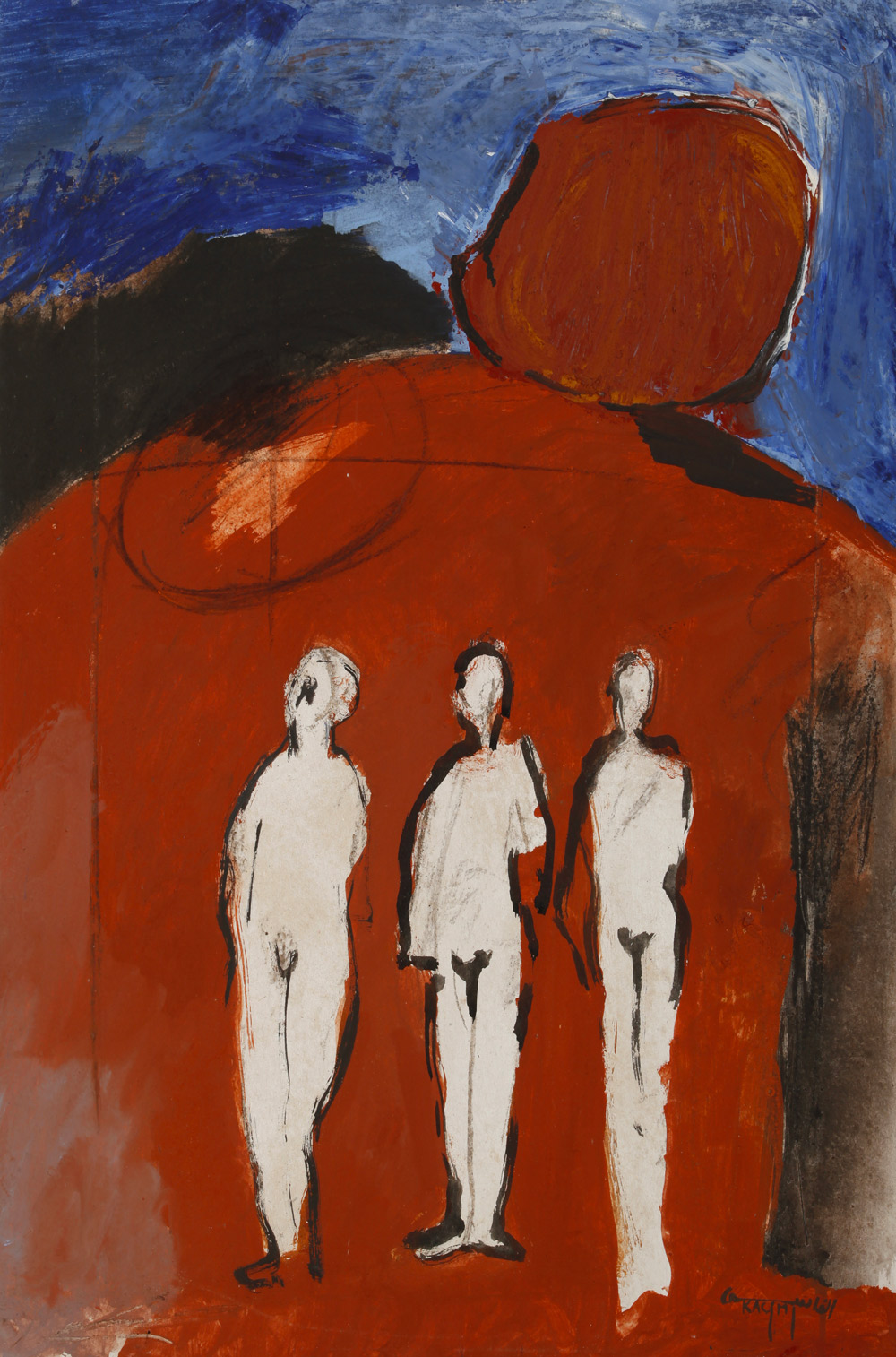
The exhibition currently presented by the Comptoir des Mines, following the one presented in 2018 at the MUCEM – "Kacimi, An African Transition 1993-2003" – revisits the works of this final period, marked by a figuration with universal reach and a most stripped-back colour palette. The figures that Kacimi stages shine first and foremost through their singularity. A simple line is enough to sketch a posture: a tense body highlights the desire for emancipation, a body that bends refers to resistance against oppression, a body that opens its legs expresses the aspiration to give life or to be reborn. Nothing of the human condition of these descendants of slavery and colonial domination was foreign to him then.
Nomadic Artist
In the catalogue of an exhibition for human rights organised in Rabat in 2002, he thus likens the activist to "a nomad involved in their environment", adding that they "have no specific territory." The painter suggests this deterritorialisation through a particular attention paid to the spatiality of his works, in which beings seem to be as much in weightlessness as they are subject to the laws of a gravity that can be confused with the burden or the yoke of History.
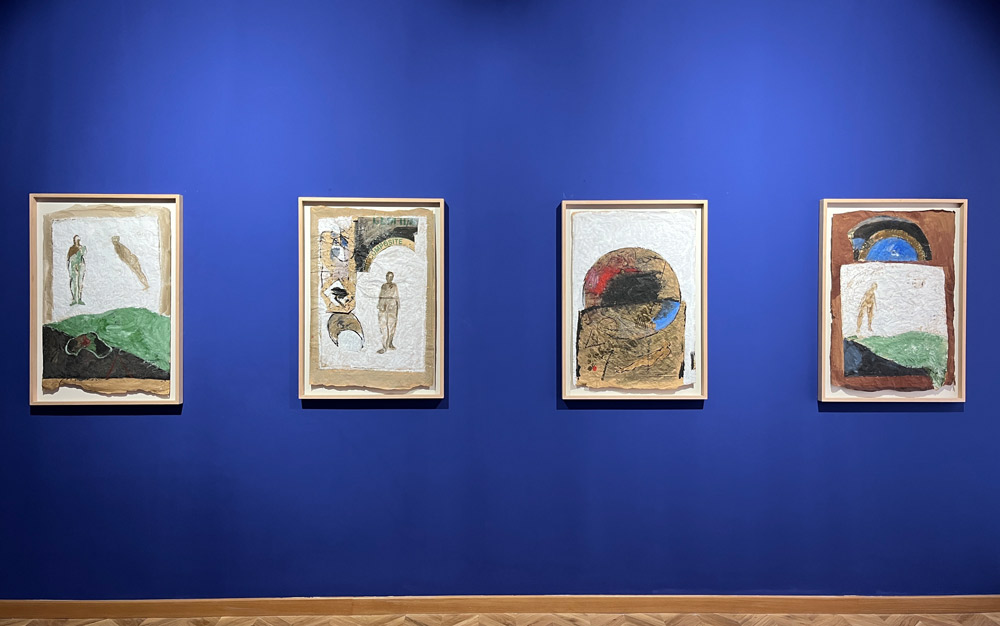
This attention to the other is also found in the figure of the storyteller present in several canvases and in a series of portraits on paper from 1994, whose titles resemble true prose poems: The dawn where your face of old, The memory of the nights of the South. Words sometimes invite themselves onto the canvas, as in this untitled work created in 2001 in Mali, on which the painter writes his aspiration to unveil the poem inscribed in every body. An economy of means presides over many works, and Kacimi does not hesitate to use simple wooden boxes or mosquito nets as supports, whose prosaic nature refers to the African realities that then nourished his creation.

A fraternal blue
The painter's colour palette oscillates between two polarities: ochres suggesting desert expanses or the harshness of a land of fire, and a nila blue expressing the aspiration to an infinity that is more fraternal than cosmic. In one of the quotes that accompanies a scenography as stripped-back as it is majestic, alternating walls repainted in the artist's colours and enlarged archival photographs, Kacimi looks back at the existential dimension of his chromatic choices: "I open myself to the sky and I am traversed by the blues. I lower my head towards the ground, it is the ochre. Everything takes me. Only possibility: to be in a state of nerves." But it is often white that seems to carry the day, a colour whose asperities the painter highlights more than its luminescence, as in this magnificent 1999 canvas The white desert, where the hieratic figure of a desert man, the blooming of a flower, and a few red dots that could evoke a secret message coexist, as enigmatic and painful as the condition of African peoples in search of their liberation.
Olivier Rachet
Exhibition "Mohamed Kacimi, 1994-2003, A Universal Work", Comptoir des Mines, Marrakech, until January 15, 2025. A new hanging will be presented for the 1-54 fair.
The article In Marrakech, Kacimi's African influences appeared first on Diptyk Magazine.