

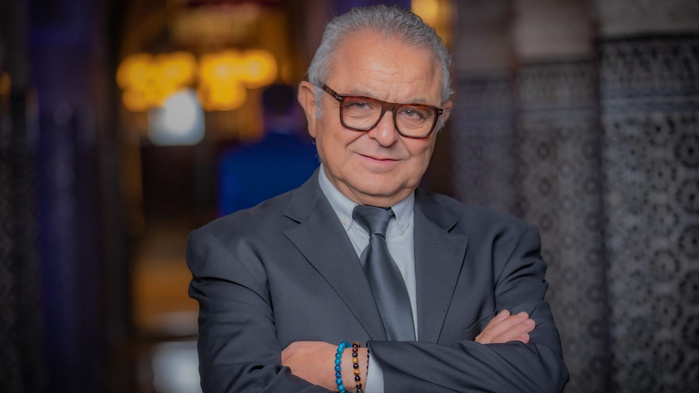
Speaking at the opening of the 39th National Architect's Day under the theme "The citizen architect facing climate change: Energy and water issues", Mr. Benabdellah highlighted the need to emphasize the role that the architect must assume in the face of the climate change problem.
The architect, much more than a designer of space, is a key actor in this ecological transition and their civic role must manifest itself significantly in this context, where energy and water issues are at the heart of concerns, Mr. Benabdellah stated during this day initiated under the High Patronage of His Majesty King Mohammed VI.
He explained that this role must manifest itself in particular through the management of building energy by designing high-energy-performance buildings favoring renewable energies, the choice of materials by favoring local products with low environmental impact, and the use of passive strategies such as orientation and natural ventilation.
According to him, the architect can also integrate water recovery and treatment into the design of rainwater collection systems and water treatment to reduce pressure on water resources.
For his part, the president of the Fès-Meknès Regional Council, Abdelouahed El Ansari, emphasized the major role played by the architect who works to define the contours of the urban future of Moroccan cities through their designs, the improvement of urban space, and the protection of the environment.
Given their central role, he said, the architect today becomes a key actor capable of bringing change in the service of sustainable development based on the development of ecological solutions capable of contributing to the saving of water resources, in particular, emphasizing the importance given by the regional council to this ecological issue, especially within the framework of its Regional Land Use Planning Scheme (SRAT).
As for the president of the North-Center Council of the Fès-Meknès region and Guersif provinces-Fès zone, Hicham Amrani Jouti, he recalled that this day celebrates the historic speech delivered by the late HM Hassan II on 14 January 1986 in Marrakech, which highlighted the role of the architect in the development of Morocco through the marriage of authenticity and modernity.
He added that Moroccan architecture continues today, under the enlightened guidance of HM King Mohammed VI, its development process in the service of sustainable development, meeting ecological and social challenges.
By hosting this event dedicated to architecture, the city of Fès is more than an ancient city but constitutes a source of inspiration and a case study for historic cities capable of renewing themselves and contributing to the creation of a better future, noted Mr. Amrani Jouti, adding that "we are today more than ever invited to design cities and buildings that are respectful of the environment and economical in energy and water resources".
The Chairman of the Board of the Al Omrane Development Holding, for his part, highlighted the relevance of the theme chosen for this day which highlights the civic role of the architect, recalling in this context the role and the great mobilization of Moroccan architects to provide assistance to citizens and public authorities following the earthquake that struck the Al Haouz region.
El Ghazaoui elaborated on the initiatives taken in collaboration with the National Council of the Order of Architects to achieve the Sustainable Development Goals (SDGs), including the development of a rural planning framework.
Initiated by the National Council of the Order of Architects (CNOA), in partnership with the Ministry of National Land Use Planning, Urbanism, Housing, and City Policy, this day sees the participation of architects, experts, and decision-makers, in addition to representatives of African architects' orders and organizations.
This annual meeting, instituted in homage to the historic speech delivered by the late HM Hassan II on 14 January 1986 in Marrakech, was part of a context of environmental emergency this year by focusing on the role of architects in the transition towards sustainable development and on innovative approaches to meet the growing challenges related to water stress and energy management.
The opening ceremony of this meeting took place in the presence of, among others, the Secretary of State to the Minister of National Land Use Planning, Urbanism, Housing, and City Policy, in charge of Housing, the Wali of the Fès-Meknès Region, Governor of the Fès Prefecture, and the governors of the prefectures and provinces of the region.
The event also brings together presidents of major international professional organizations, including the African Union of Architects (AUA), the Mediterranean Union of Architects (UMAR), and the Federation of Francophone Architects of Africa (FAFA).
The architect, much more than a designer of space, is a key actor in this ecological transition and their civic role must manifest itself significantly in this context, where energy and water issues are at the heart of concerns, Mr. Benabdellah stated during this day initiated under the High Patronage of His Majesty King Mohammed VI.
He explained that this role must manifest itself in particular through the management of building energy by designing high-energy-performance buildings favoring renewable energies, the choice of materials by favoring local products with low environmental impact, and the use of passive strategies such as orientation and natural ventilation.
According to him, the architect can also integrate water recovery and treatment into the design of rainwater collection systems and water treatment to reduce pressure on water resources.
For his part, the president of the Fès-Meknès Regional Council, Abdelouahed El Ansari, emphasized the major role played by the architect who works to define the contours of the urban future of Moroccan cities through their designs, the improvement of urban space, and the protection of the environment.
Given their central role, he said, the architect today becomes a key actor capable of bringing change in the service of sustainable development based on the development of ecological solutions capable of contributing to the saving of water resources, in particular, emphasizing the importance given by the regional council to this ecological issue, especially within the framework of its Regional Land Use Planning Scheme (SRAT).
As for the president of the North-Center Council of the Fès-Meknès region and Guersif provinces-Fès zone, Hicham Amrani Jouti, he recalled that this day celebrates the historic speech delivered by the late HM Hassan II on 14 January 1986 in Marrakech, which highlighted the role of the architect in the development of Morocco through the marriage of authenticity and modernity.
He added that Moroccan architecture continues today, under the enlightened guidance of HM King Mohammed VI, its development process in the service of sustainable development, meeting ecological and social challenges.
By hosting this event dedicated to architecture, the city of Fès is more than an ancient city but constitutes a source of inspiration and a case study for historic cities capable of renewing themselves and contributing to the creation of a better future, noted Mr. Amrani Jouti, adding that "we are today more than ever invited to design cities and buildings that are respectful of the environment and economical in energy and water resources".
The Chairman of the Board of the Al Omrane Development Holding, for his part, highlighted the relevance of the theme chosen for this day which highlights the civic role of the architect, recalling in this context the role and the great mobilization of Moroccan architects to provide assistance to citizens and public authorities following the earthquake that struck the Al Haouz region.
El Ghazaoui elaborated on the initiatives taken in collaboration with the National Council of the Order of Architects to achieve the Sustainable Development Goals (SDGs), including the development of a rural planning framework.
Initiated by the National Council of the Order of Architects (CNOA), in partnership with the Ministry of National Land Use Planning, Urbanism, Housing, and City Policy, this day sees the participation of architects, experts, and decision-makers, in addition to representatives of African architects' orders and organizations.
This annual meeting, instituted in homage to the historic speech delivered by the late HM Hassan II on 14 January 1986 in Marrakech, was part of a context of environmental emergency this year by focusing on the role of architects in the transition towards sustainable development and on innovative approaches to meet the growing challenges related to water stress and energy management.
The opening ceremony of this meeting took place in the presence of, among others, the Secretary of State to the Minister of National Land Use Planning, Urbanism, Housing, and City Policy, in charge of Housing, the Wali of the Fès-Meknès Region, Governor of the Fès Prefecture, and the governors of the prefectures and provinces of the region.
The event also brings together presidents of major international professional organizations, including the African Union of Architects (AUA), the Mediterranean Union of Architects (UMAR), and the Federation of Francophone Architects of Africa (FAFA).
