

Organisée par le Syndicat Marocain des Artistes Plasticiens Professionnels, l’exposition « 60 ans de peinture au Maroc (1965-2025) », présentée dans quatre différents espaces de Rabat, esquisse quelques lignes de fuite intéressantes d’une histoire de la peinture marocaine qui reste encore à écrire.
Le peintre Fouad Bellamine a coutume de dire qu’il « n’y a pas de peinture marocaine, mais des peintres marocains ». Pour facétieuse que paraisse cette formule, elle a le mérite d’arrimer une possible histoire de la peinture au Maroc à des critères autres que politiques ou identitaires, comme ce fut notamment le cas avec le groupe de Casablanca. En choisissant pour l’exposition « 60 ans de peinture au Maroc » une amplitude chronologique allant de 1965 jusqu’à aujourd’hui, le Syndicat Marocain des Artistes Plasticiens Professionnels (SMAPP), qui s’associe pour l’occasion au Ministère de la Culture et à huit galeries partenaires, a le mérite de nous aider à tracer quelques lignes de force, malgré un accrochage parfois amateur, tant l’oubli de certains cartels ou de mention des galeries associées est ici regrettable.
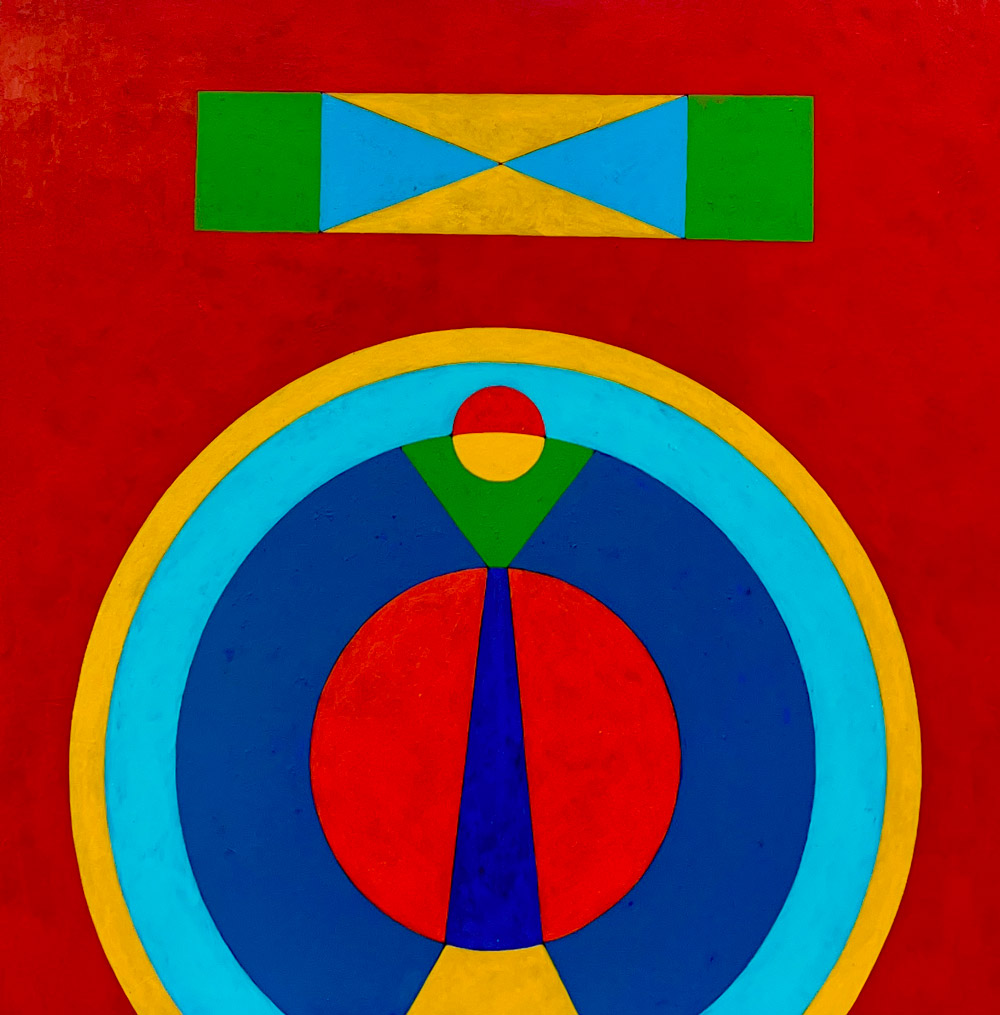
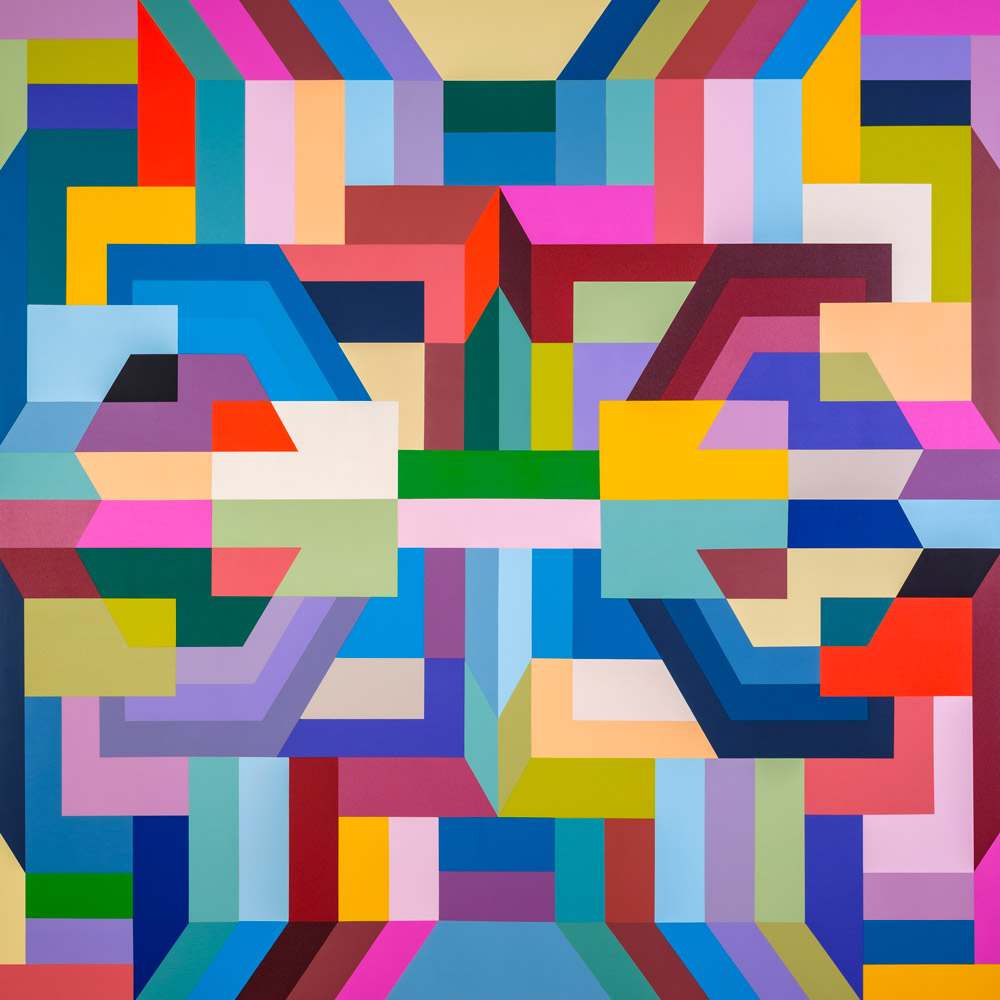
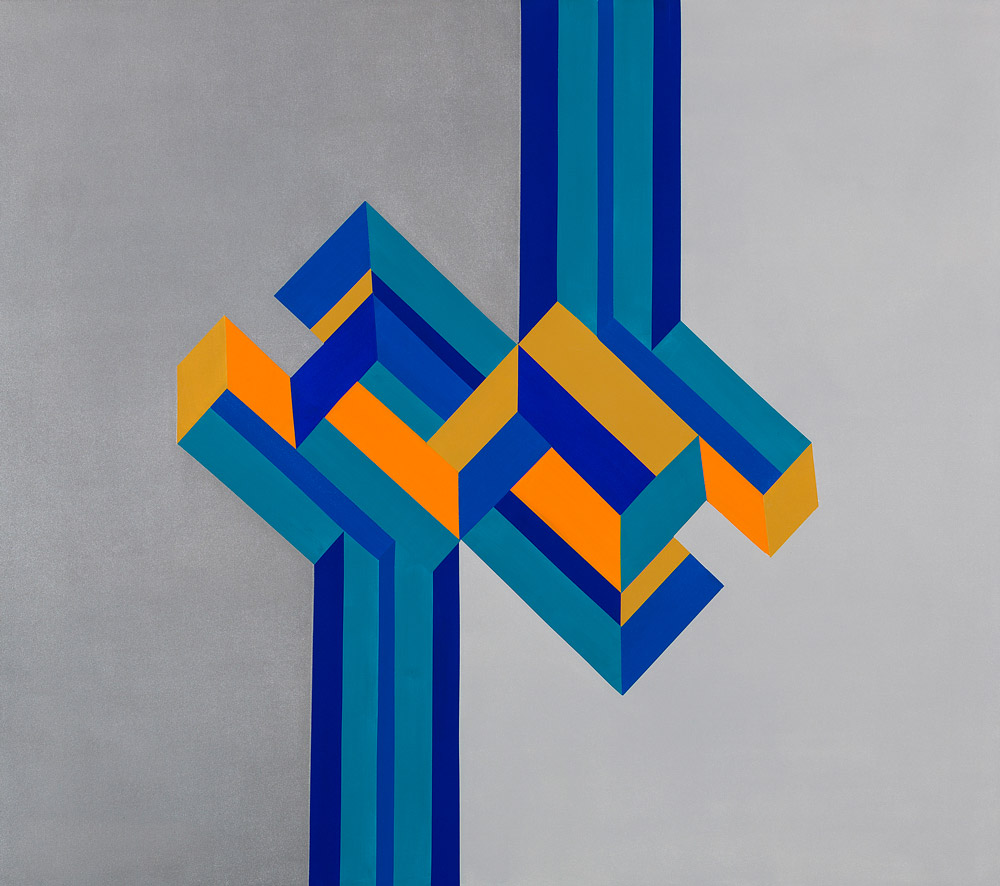
On mesure tout d’abord combien reste prégnante l’aventure de l’abstraction géométrique initiée par le groupe de Casablanca représenté par une toile tardive et maniériste de Mohamed Hamidi, récemment disparu. L’accrochage de la galerie Bab Rouah, qui après l’exposition présentée en septembre dernier à l’occasion des 10 ans du Comptoir des Mines, semble retrouver un second souffle, fait dialoguer de façon convaincante des toiles d’artistes pionniers tels que Bachir Demnati, Malika Agueznay ou Mustapha Hafid avec des œuvres plus contemporaines de Meriam Benkirane, Youssef Douieb, Ghizlane Agzenaï ou Younes Khourassani dont une peinture cellulosique sur panneau brille par sa dextérité digne de l’Op Art. On reconnaît la ligne éditoriale de la Galerie 38 ou de Loft Art Gallery qui plaident depuis longtemps pour mettre en avant cette perpétuation de l’abstraction d’une génération à l’autre.
Abstraction en force
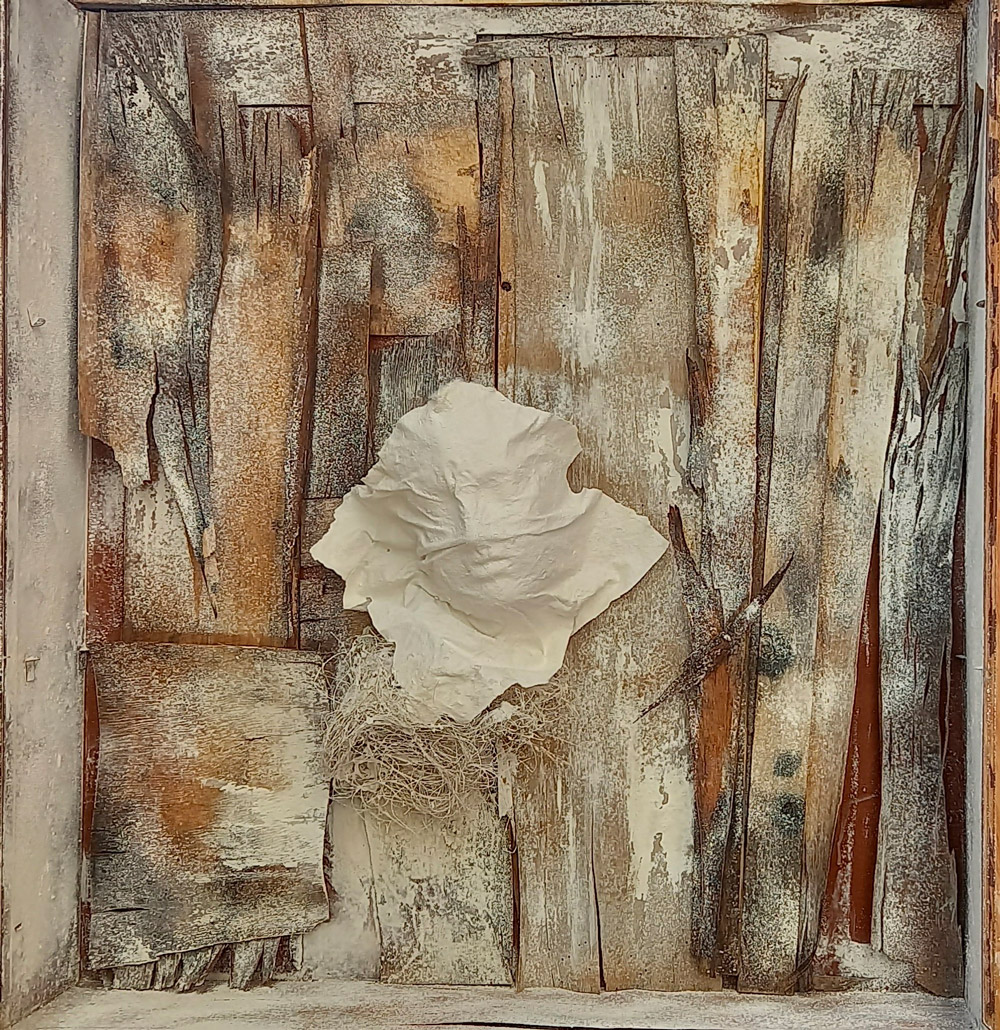
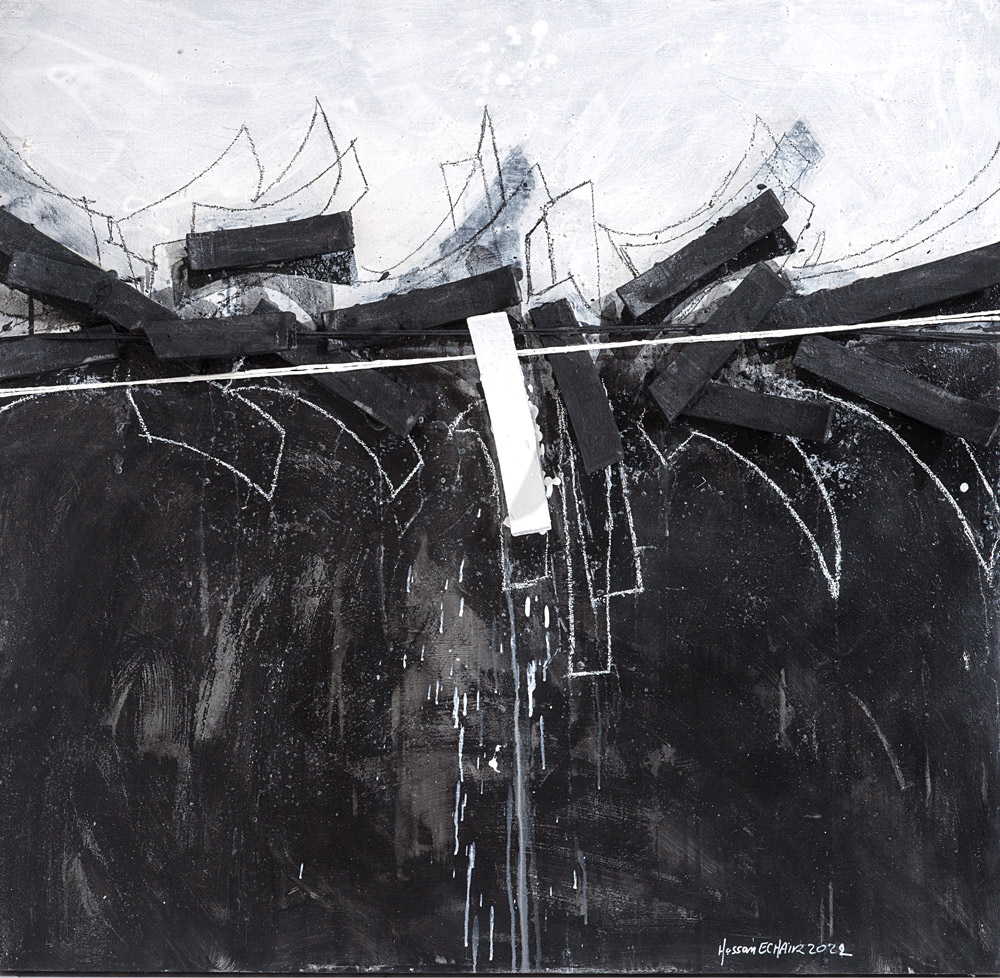
Les différents accrochages dévoilent une autre ligne de force montrant comment de nombreux artistes plasticiens ont su s’affranchir du support de la toile pour donner forme à des bas-reliefs ou des installations sculpturales séduisantes. Les œuvres de Itaf Benjelloun, de Ahmed Hajoubi entrent ainsi dans un dialogue fécond avec une peinture sculpturale d’Abdelkrim Ouazzani ou un Oiseau de plaisir en bois massif sculpté de Jamil Bennani qui trouve toute sa place à Bab Rouah. S’il est aussi intéressant d’observer un penchant matiériste chez des peintres tels que Hassan Echair ou Mohamed Anzaoui, nombreux sont les artistes à s’inscrire dans une école du signe – beaucoup plus que d’une écriture à proprement parler calligraphique –, dont Cherkaoui a été le précurseur.
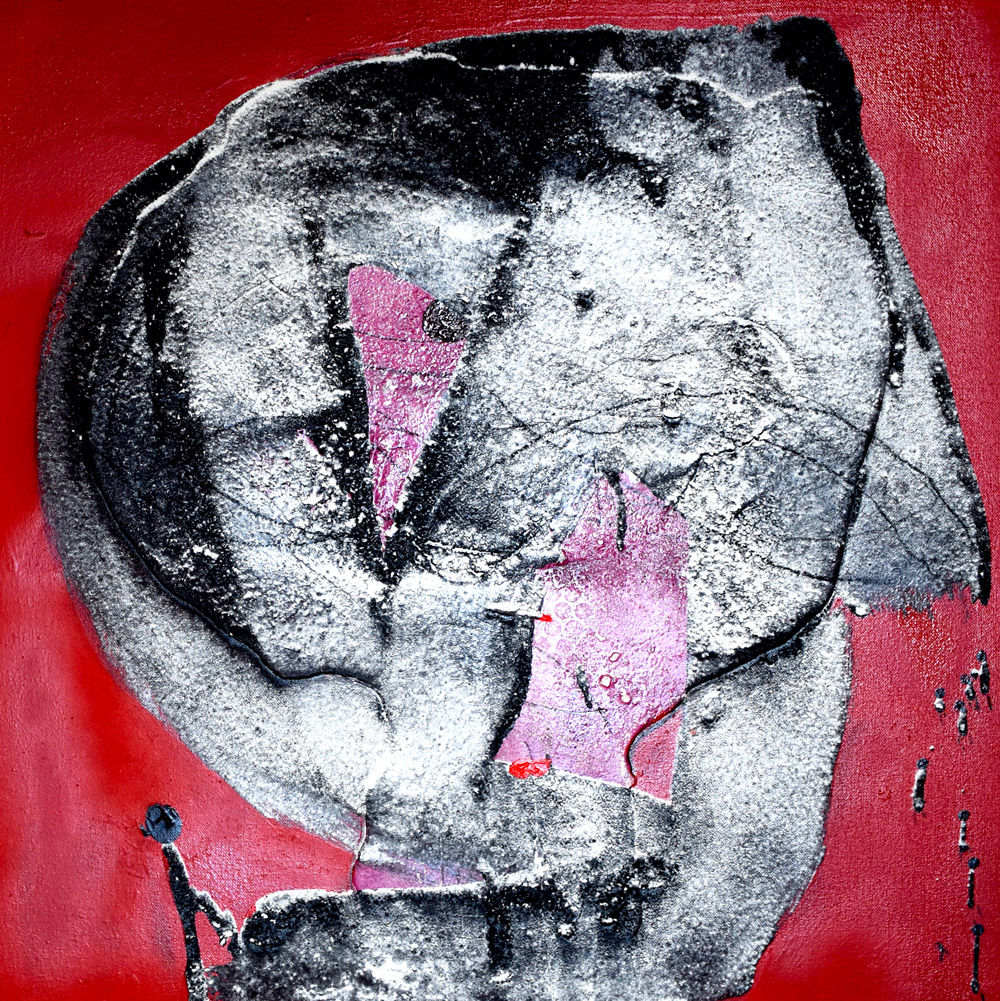
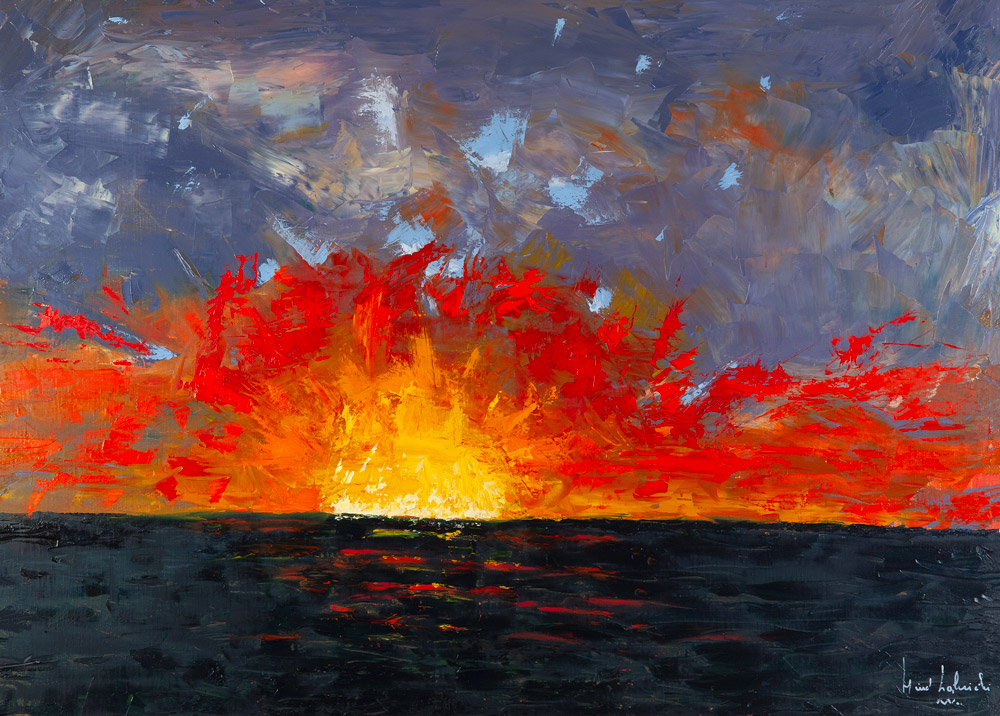
La Villa des Arts en montre des exemples convaincants à travers des toiles de Abdellah El Hariri, de la regrettée plasticienne tangéroise disparue cet été Najoua El Hitmi ou d’Abdessamad Bouysramne dont un Monochrome gris révèle toute la virtuosité. Ce penchant pour l’abstraction, allant à rebours de l’idée selon laquelle nous assistons à un retour en force de la figuration en peinture, trouve des accents plus lyriques dans une toile de Monia Touiss qui s’apparente à un paysage abstrait ou dans des œuvres à la gestualité plus vibrante d’Omar Bouragba ou Abdelilah Lahbabi.
De trop rares dessins ou œuvres sur papier de Mohamed Rachdi, Abdelkébir Rabi ou de Mohamed Lekleti nous rappellent combien ce médium reste encore sous-représenté dans la création contemporaine. Dans un entretien inédit que l’historienne de l’art Toni Maraini nous accorda récemment, celle-ci mettait en lumière les raisons de cette relative désaffection. « L’enseignement du dessin à l’École des Beaux-arts de Casa dans les années soixante ne fut pas délaissé mais, plutôt, reconsidéré et renouvelé, nous confiait-elle. Vu le programme qui y avait été auparavant appliqué – programme plutôt colonial en thématiques et procédures basées sur des exercices académiques (entre autres, on donnait à copier aux élèves de vieilles copies en plâtre de quelque sculpture romaine) –un changement était inévitable, un esprit nouveau nécessaire. En accord avec Belkahia, Melehi et Chabâa avaient introduit d’autres méthodes et exercices. Lors des rencontres et discussions de groupe avec les élèves, plusieurs d’entre eux demandaient d’être initiés à l’Art Graphique, la Calligraphie et une plus moderne conception des formes et techniques du dessin. Il s’agissait donc non plus de leur faire copier des modèles mais de leur apprendre à maîtriser traces et gestes, capter et exprimer l’ordre visuel des formes. Abstraction et figuration ne s’excluaient pas (comme d’ailleurs dans l’œuvre de Belkahia, Chabâa, Hamidi et d’autres artistes du Groupe de Casa). Il s’agissait d’une rupture correspondant à une phase culturelle particulière, à la fois ouverte aux recherches modernes et à une approche identitaire. Familiariser les élèves avec formes et iconographies des arts traditionnels/populaires fut, à cet égard et pour l’époque, une nouveauté. Cette phase de rupture avait certainement ses limites quant à l’enseignement du dessin figuratif. Mais elle fut libératoire. »
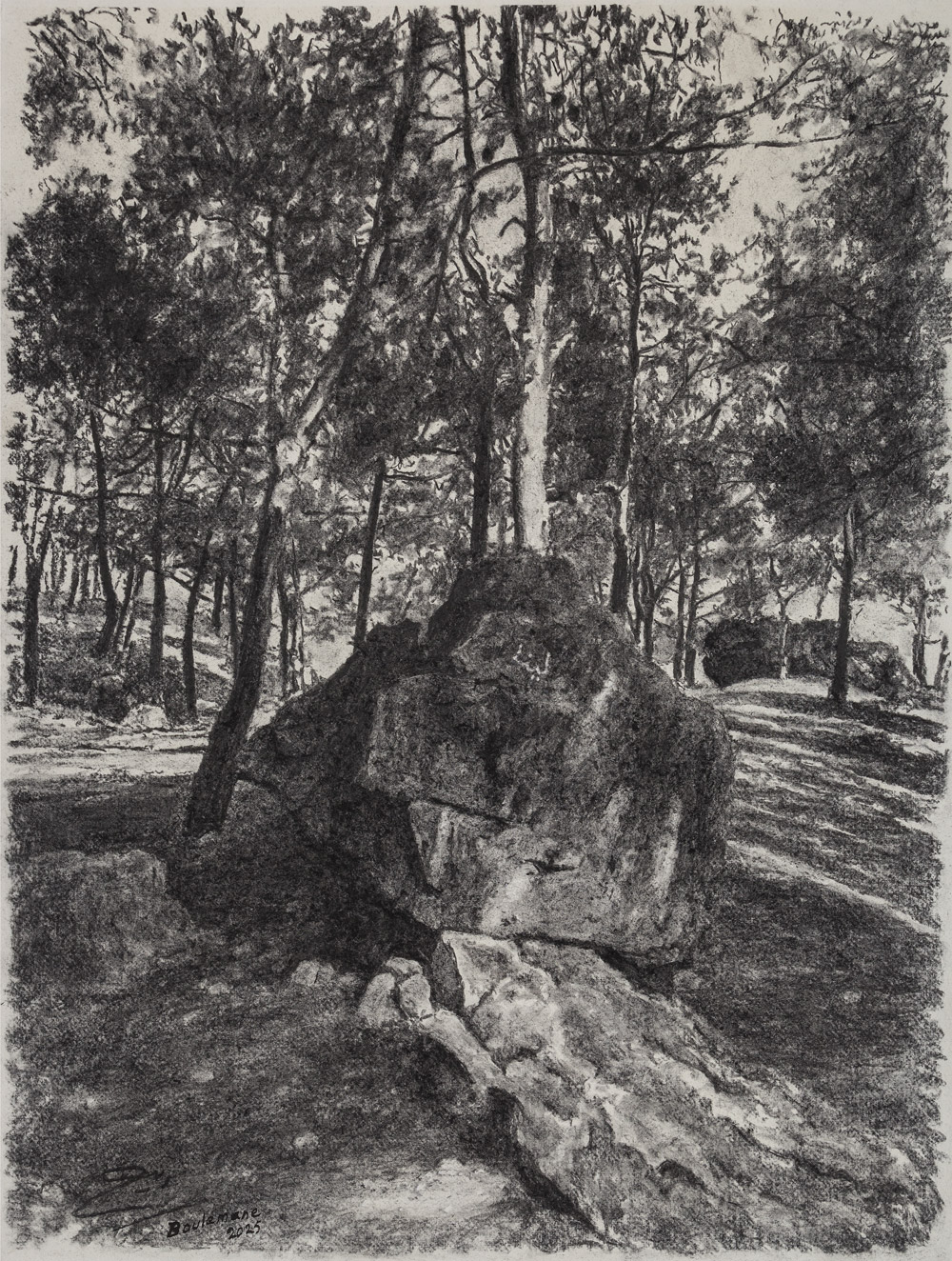
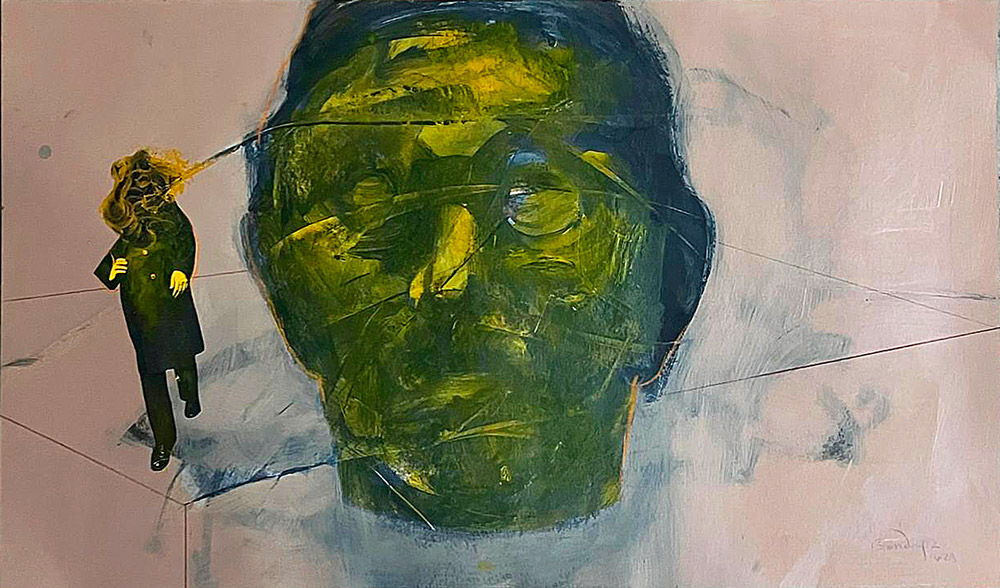
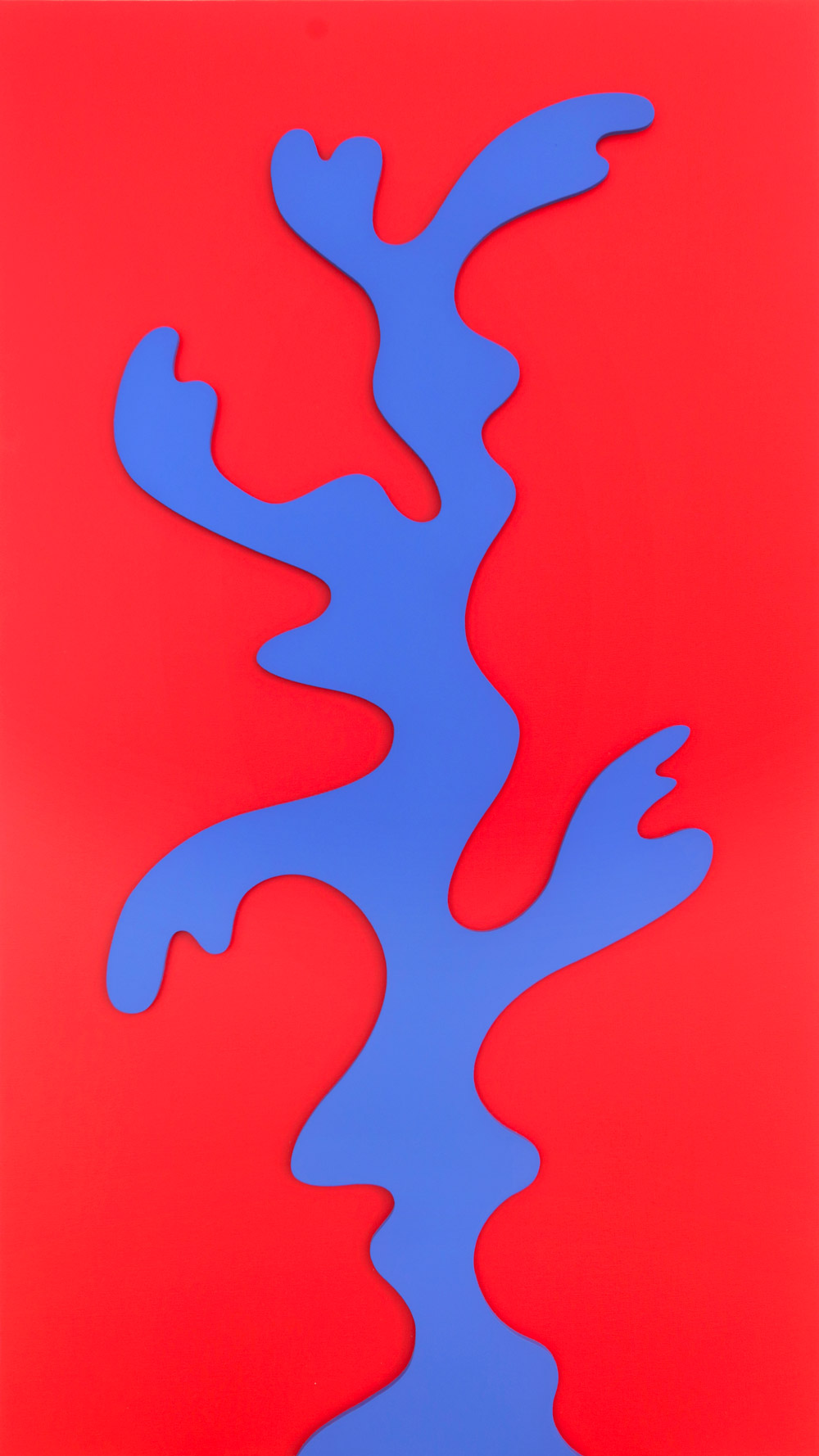
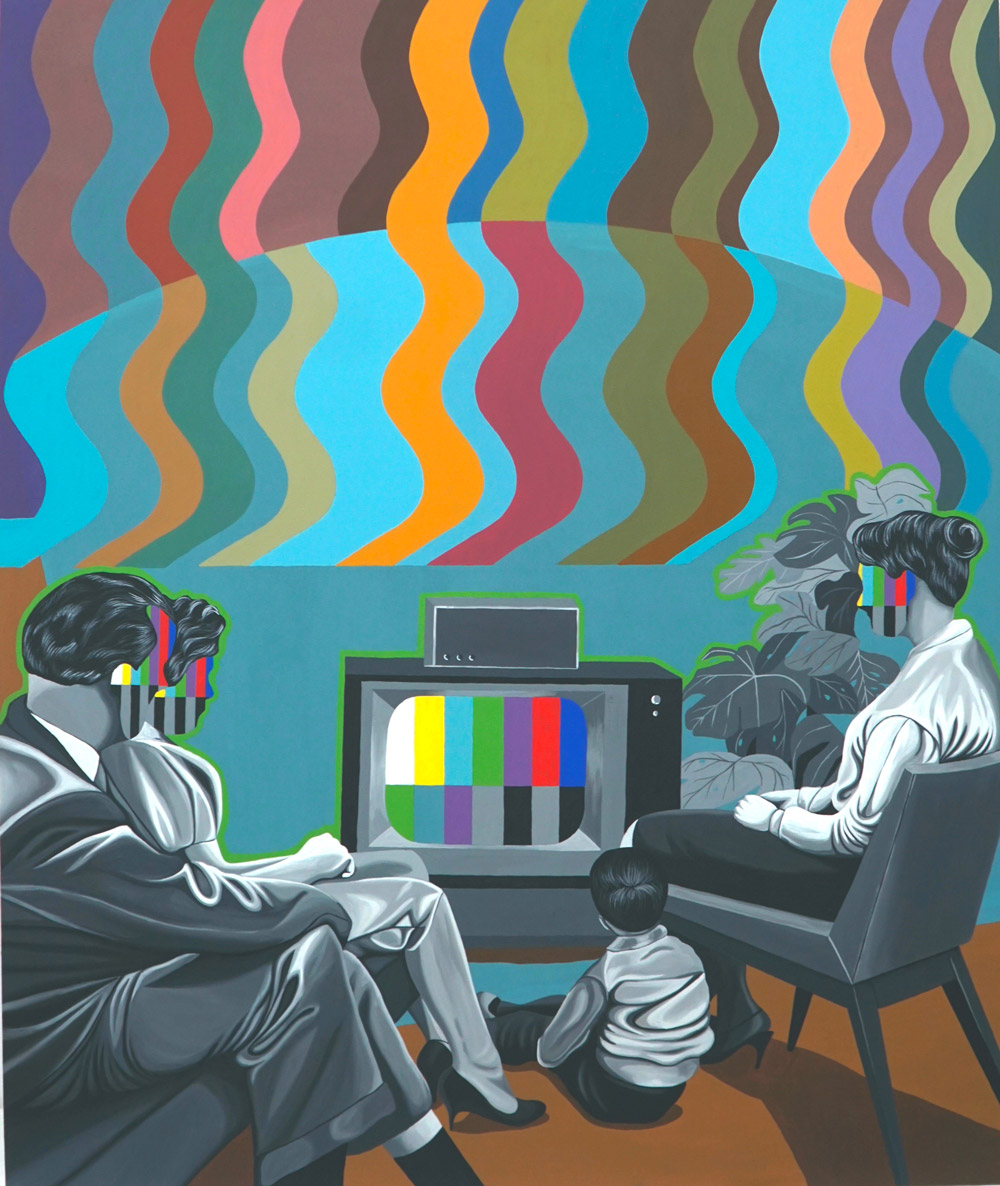
Sans doute peut-on comprendre ainsi l’attrait que continue d’exercer une peinture abstraite, au détriment d’une figuration sous-représentée dans cette exposition. S’il ne s’agit pas ici d’ébaucher une histoire de la peinture au Maroc, il n’en demeure pas moins que cette exposition conçue pour être itinérante dessine quelques tendances intéressantes, d’où se détachent néanmoins des singularités plastiques échappant aux modes. Tel est ainsi le cas pour une toile à l’expressionnisme sculptural de Nabil Boudarqa, un collage plastique virtuose de Bachir Amal, un fusain gracieux de Hajar El Moustaassime ou une toile de Hicham Matini The Room of distraction dans laquelle le motif de l’onde cher à Melehi se renouvelle avec un esprit satirique rassérénant. « Les talents sont au rendez-vous, reconnaît Mansouri Idrissi Sidi Mohammed, Président du SMAPP, et l’enjeu de demain réside dans l’épanouissement d’un écosystème intégré ». Une autre histoire des arts visuels et des industries créatives qui commence aussi à s’écrire.
Olivier Rachet
Exposition « 60 ans de peinture au Maroc (1965-2025) », Galeries Bab Rouah, Bab El Kébir, Villa des Arts-Fondation Al Mada, Musée de Bank Al-Maghrib, Rabat, jusqu’au 29 janvier 2026, en collaboration avec Loft Art Gallery, Eden Art Gallery, Galerie Dar D’art et Mazad Art, Khalid Fine Arts Gallery, Galerie 38, Galerie noir sur blanc, Galerie Kent et Myriem Himmich Gallery.
Organized by the Moroccan Union of Professional Visual Artists, 60 ans de peinture au Maroc (1965–2025) is presented across four venues in Rabat and traces key moments in a still-emerging history of Moroccan painting.
Painter Fouad Bellamine is fond of saying that “there is no Moroccan painting, only Moroccan painters.” Playful as the phrase may sound, it usefully anchors any possible history of painting in Morocco in criteria other than political or identity-based frameworks, as was notably the case with the Casablanca Group. By choosing a chronological span stretching from 1965 to the present, the Moroccan Union of Professional Visual Artists (SMAPP), partnering with the Ministry of Culture and eight galleries, provides a helpful framework for identifying key throughlines, despite an occasionally uneven installation. The absence of certain wall labels or gallery credits is regrettable and lends parts of the exhibition an amateurish feel.
The lasting imprint of geometric abstraction initiated by the Casablanca Group is immediately apparent, embodied here by a late, mannerist canvas by the recently deceased Mohamed Hamidi. At Bab Rouah Gallery, which seems to have regained momentum following the exhibition marking the tenth anniversary of Comptoir des Mines last September, works by pioneering figures such as Bachir Demnati, Malika Agueznay, and Mustapha Hafid enter into a convincing dialogue with more contemporary pieces by Meriam Benkirane, Youssef Douieb, Ghizlane Agzenaï, and Younes Khourassani. The latter’s cellulosic painting on panel stands out for its Op Art–like dexterity. This curatorial stance echoes the long-standing editorial line of galleries such as Galerie 38 and Loft Art Gallery, both of which have consistently championed the transmission of abstraction from one generation to the next.
Abstraction in Force
Across the various venues, another strong throughline emerges: the way many artists have moved beyond the canvas to explore bas-relief and sculptural installations. Works by Itaf Benjelloun and Ahmed Hajoubi enter into a fertile dialogue with Abdelkrim Ouazzani’s sculptural painting, as well as with Oiseau de plaisir, a solid wood sculpture by Jamil Bennani that finds a natural place at Bab Rouah. A materialist inclination is also evident in the work of painters such as Hassan Echair and Mohamed Anzaoui. Yet many artists align themselves less with calligraphy per se than with a broader “school of the sign,” an approach pioneered by Cherkaoui.
The Villa des Arts offers compelling examples through paintings by Abdellah El Hariri, the late Tangier-based artist Najoua El Hitmi, who passed away this summer, and Abdessamad Bouysramne, whose gray Monochrome reveals striking technical virtuosity. This sustained commitment to abstraction—running counter to the often-cited return of figuration in contemporary painting—takes on more lyrical tones in a canvas by Monia Touiss that reads as an abstract landscape, as well as in the more vibrantly gestural works of Omar Bouragba and Abdelilah Lahbabi.
Only a handful of drawings and works on paper by Mohamed Rachdi, Abdelkébir Rabi, and Mohamed Lekleti appear in the exhibition, a reminder of how underrepresented this medium remains in contemporary Moroccan art. In a recent unpublished interview, art historian Toni Maraini shed light on the reasons behind this relative neglect. “Drawing instruction at the Casablanca School of Fine Arts in the 1960s was not abandoned,” she explained, “but rather reconsidered and renewed. Given the previously imposed curriculum—colonial in its themes and based on academic exercises, such as copying plaster casts of Roman sculptures—change was inevitable. Belkahia, Melehi, and Chabâa introduced new methods and exercises. Through group discussions with students, many expressed a desire to be introduced to graphic art, calligraphy, and a more modern understanding of form and drawing techniques. The goal was no longer to copy models but to learn how to master marks and gestures, to grasp and express the visual order of forms. Abstraction and figuration were not mutually exclusive, as seen in the work of Belkahia, Chabâa, Hamidi, and others from the Casablanca Group. This rupture reflected a specific cultural moment, open both to modern research and to questions of identity. Familiarizing students with the forms and iconography of traditional and popular arts was, at the time, a genuine innovation. While this break had its limits in terms of teaching figurative drawing, it was ultimately liberating.”
This perspective helps explain the continued dominance of abstraction, often at the expense of figuration, which remains underrepresented in the exhibition. While the show does not claim to outline a definitive history of painting in Morocco, its itinerant format nonetheless traces several meaningful tendencies, alongside singular artistic voices that resist easy categorization. These include a canvas marked by sculptural expressionism by Nabil Boudarqa, a virtuosic plastic collage by Bachir Amal, a delicate charcoal drawing by Hajar El Moustaassime, and Hicham Matini’s The Room of Distraction, in which the wave motif associated with Melehi is reimagined with a refreshing, satirical spirit. “The talent is clearly there,” notes Mansouri Idrissi Sidi Mohammed, President of SMAPP, “and the challenge ahead lies in fostering a fully integrated ecosystem.” Another chapter in the story of visual arts and creative industries is beginning to take shape.
Olivier Rachet
« 60 ans de peinture au Maroc (1965–2025) », Bab Rouah Gallery, Bab El Kébir, Villa des Arts–Fondation Al Mada, Bank Al-Maghrib Museum, Rabat, through January 29, 2026. In collaboration with Loft Art Gallery, Eden Art Gallery, Galerie Dar D’art et Mazad Art, Khalid Fine Arts Gallery, Galerie 38, Galerie Noir sur Blanc, Galerie Kent, and Myriem Himmich Gallery.
L’article « 60 ans de peinture au Maroc » : une histoire de (dis)continuités // « 60 ans de peinture au Maroc » : A History of (Dis)Continuities est apparu en premier sur Diptyk Magazine.
